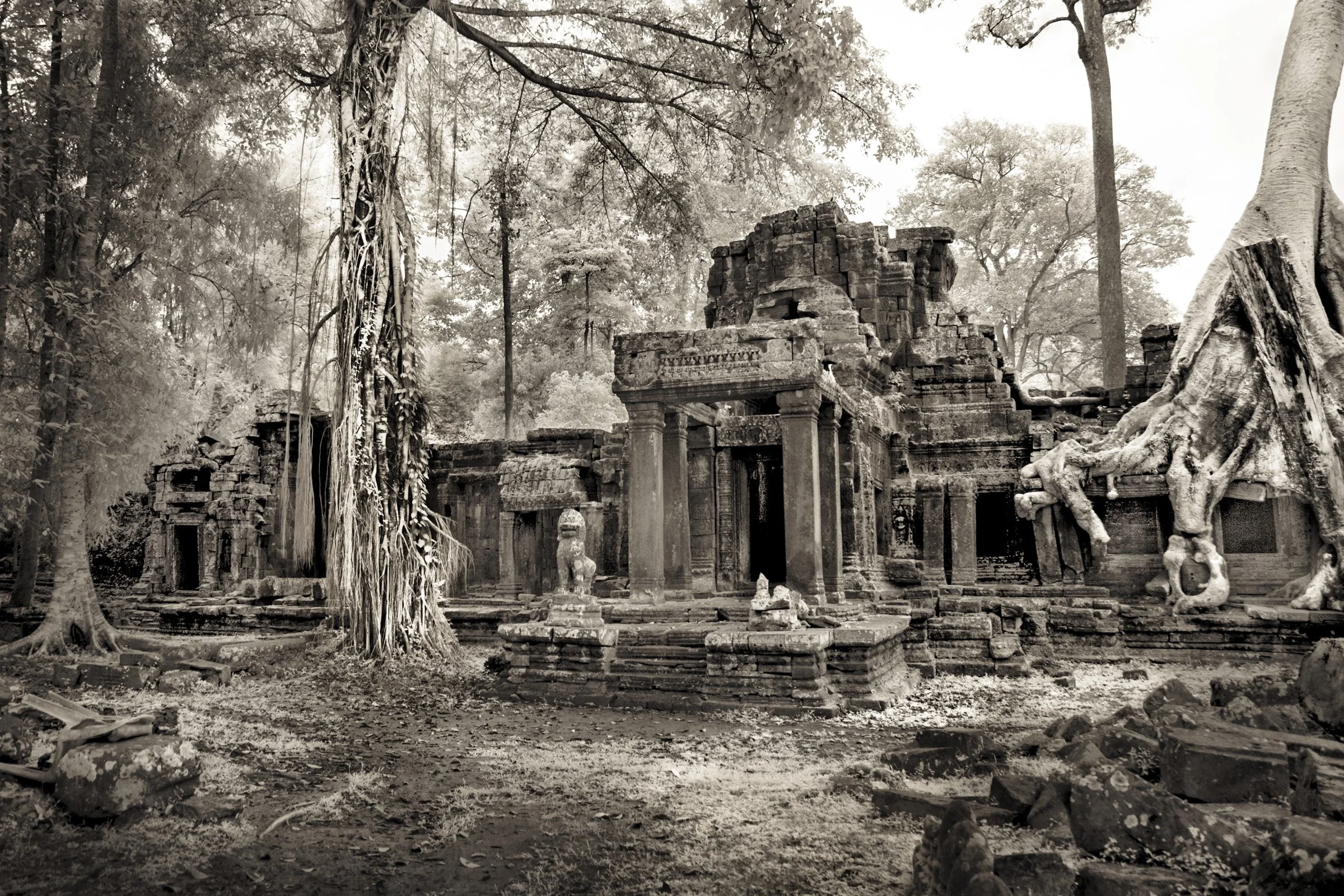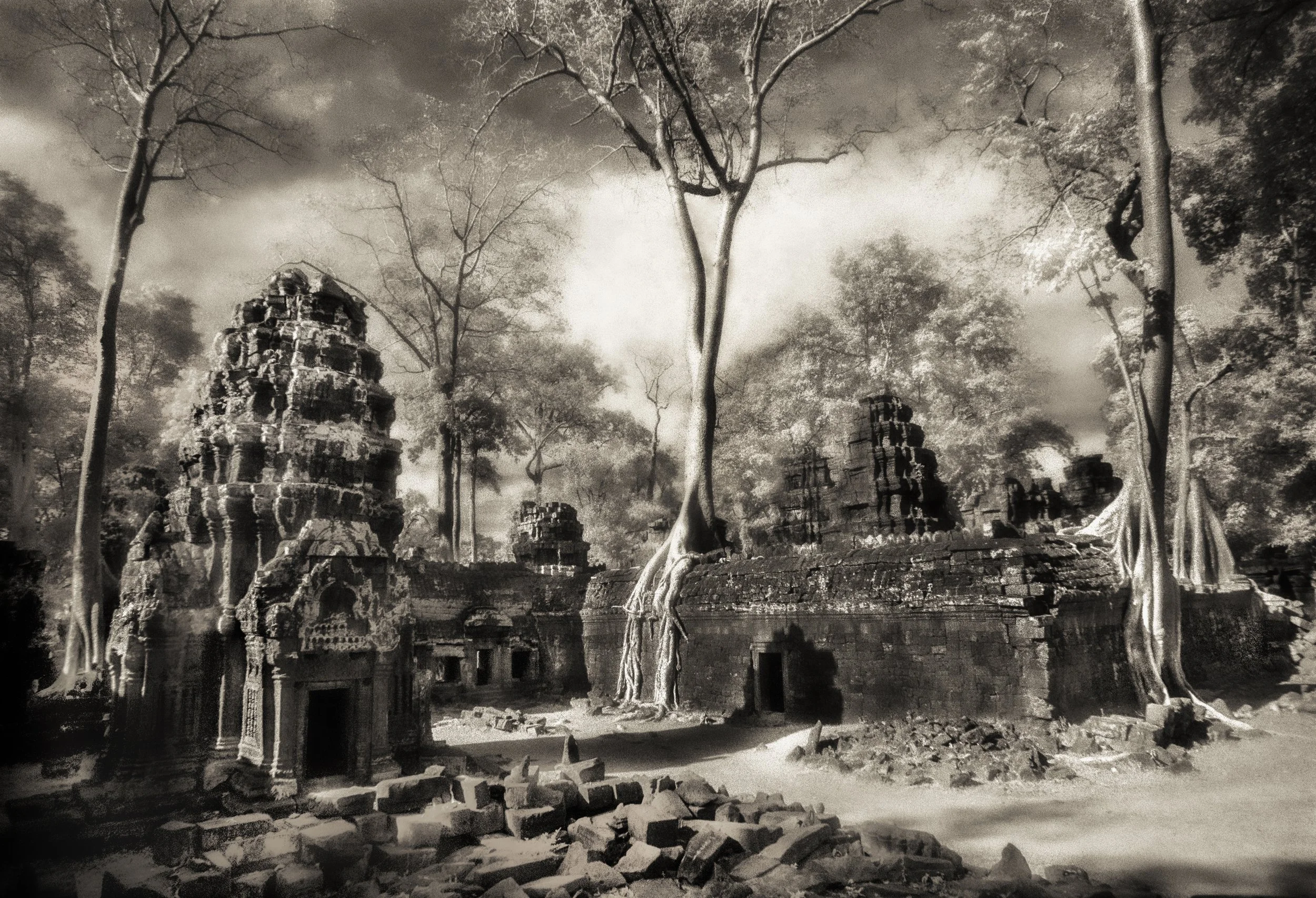
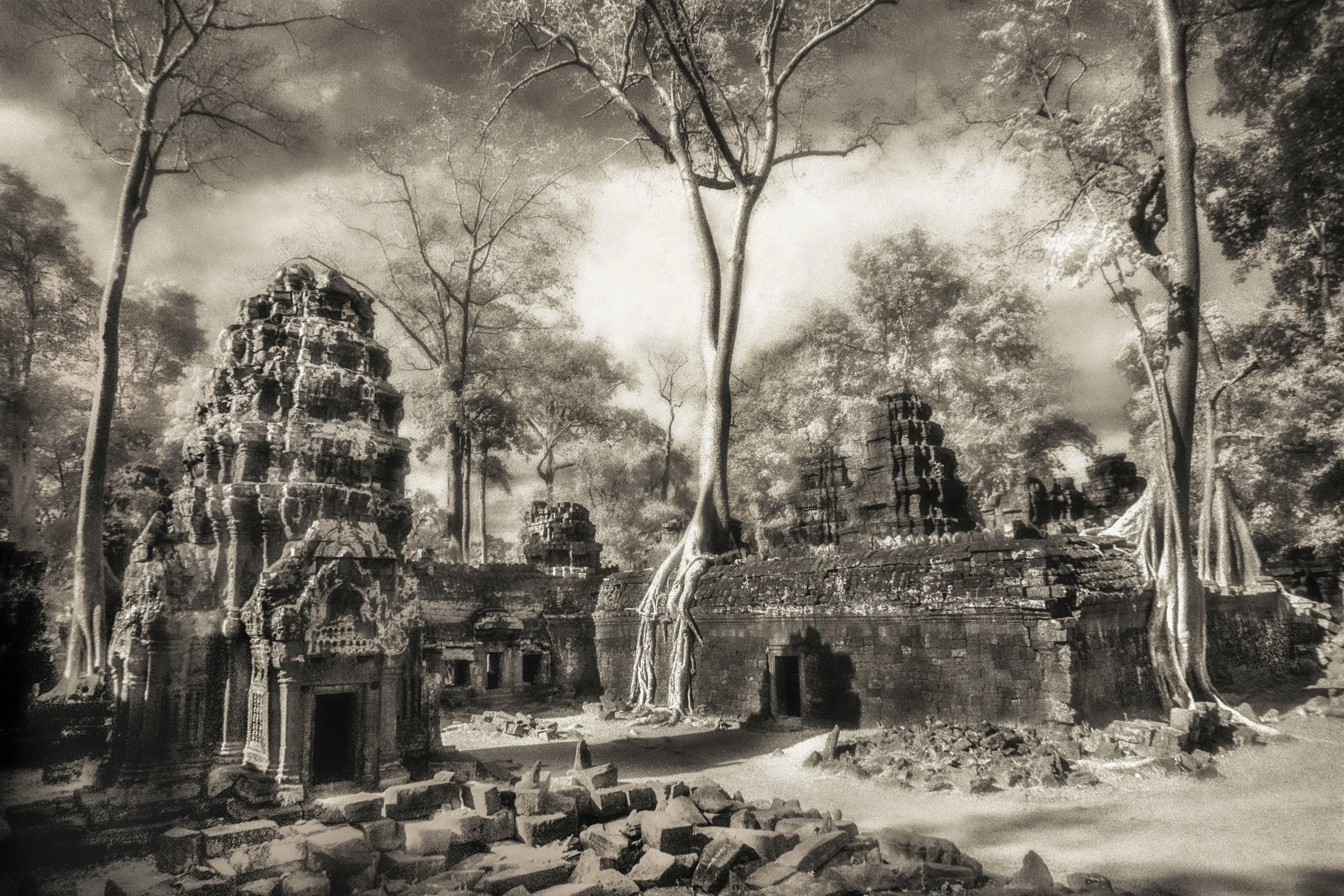
John McDermott, Ta Prohm Courtyard, 2001, Archival Pigment Ink Print, Edition #5, 30.48 x 45.72cm. (12 x 18in.)
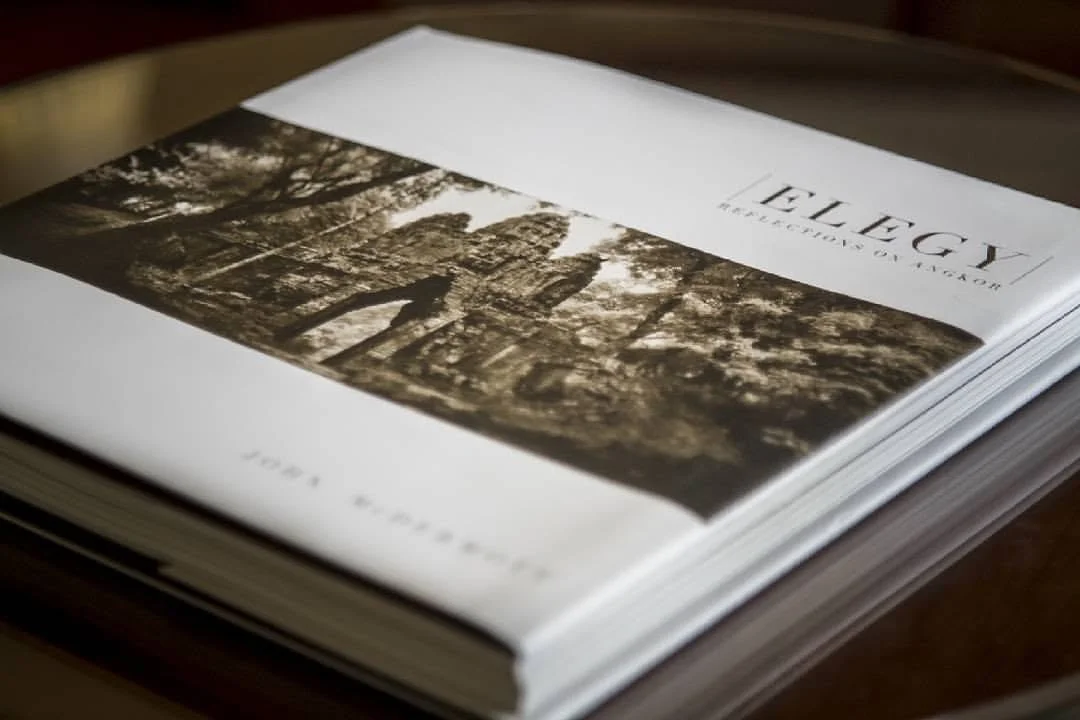
ELEGY | REFLECTIONS ON ANGKOR
Photographs by John McDermott
John McDermott’s photographs offer an encounter with Angkor suspended between history and memory. Rendered in luminous monochrome, the ancient temples emerge from forest and shadow, their weathered stone appearing at once tangible and otherworldly. Since his first visit in 1995, when he travelled to Cambodia to witness a total solar eclipse over Angkor, McDermott has developed an extensive photographic study of one of Southeast Asia’s most extraordinary architectural legacies. His work earned him the New York Times epithet “the Ansel Adams of Angkor,” recognizing his distinctive vision of the sacred landscape.
Photography has played a significant role in shaping the world’s understanding of Angkor, from the earliest nineteenth-century records to the images that circulate globally today. McDermott’s work belongs to this evolving visual history while departing from conventional architectural documentation. Through black-and-white and infrared photography, he transforms stone, foliage and shifting light into images of striking ambiguity. The temples become more than archaeological monuments: they emerge as places of spiritual presence, where time, nature and human history converge.
Made largely around the turn of the millennium, these photographs preserve a particular moment in Angkor’s modern history. As Cambodia emerged from decades of conflict and international tourism expanded, McDermott sought to capture the solitude and mystery of the temples. Many of the secluded views he encountered have since been altered by changing access, infrastructure and conservation. His work thus holds significance beyond its aesthetic power, occupying a place between fine-art photography and a visual record of a changing cultural heritage. McDermott’s relationship with Cambodia extends beyond the camera. Over two decades of residence and work in the country, he became a longstanding presence in Siem Reap’s cultural life, including through the gallery he operated in this very space for ten years. His large-format photographs are also represented in the permanent collection of the National Museum of Cambodia in Phnom Penh. In Elegy, the enduring presence of Angkor is held in delicate tension with the knowledge that every encounter with the past takes place in a changing present. These images invite us to consider what it means to witness, interpret and preserve a place whose significance reaches far beyond its physical boundaries.
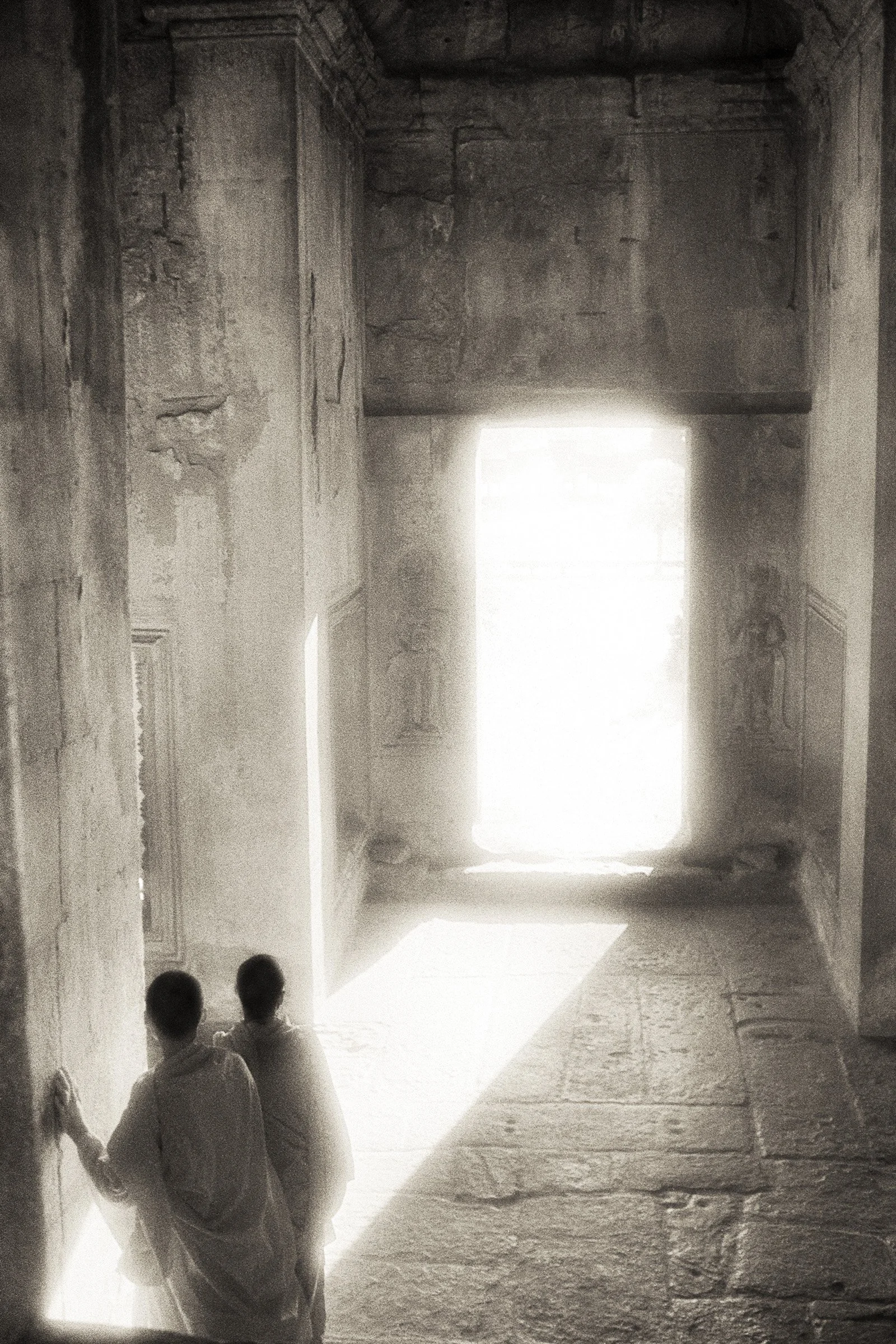
Monks in a Sunlit Doorway - Angkor Wat, 2000, Archival Pigment Ink Print, Edition #1, 30.48 x 45.72cm. (12 x 18in.)
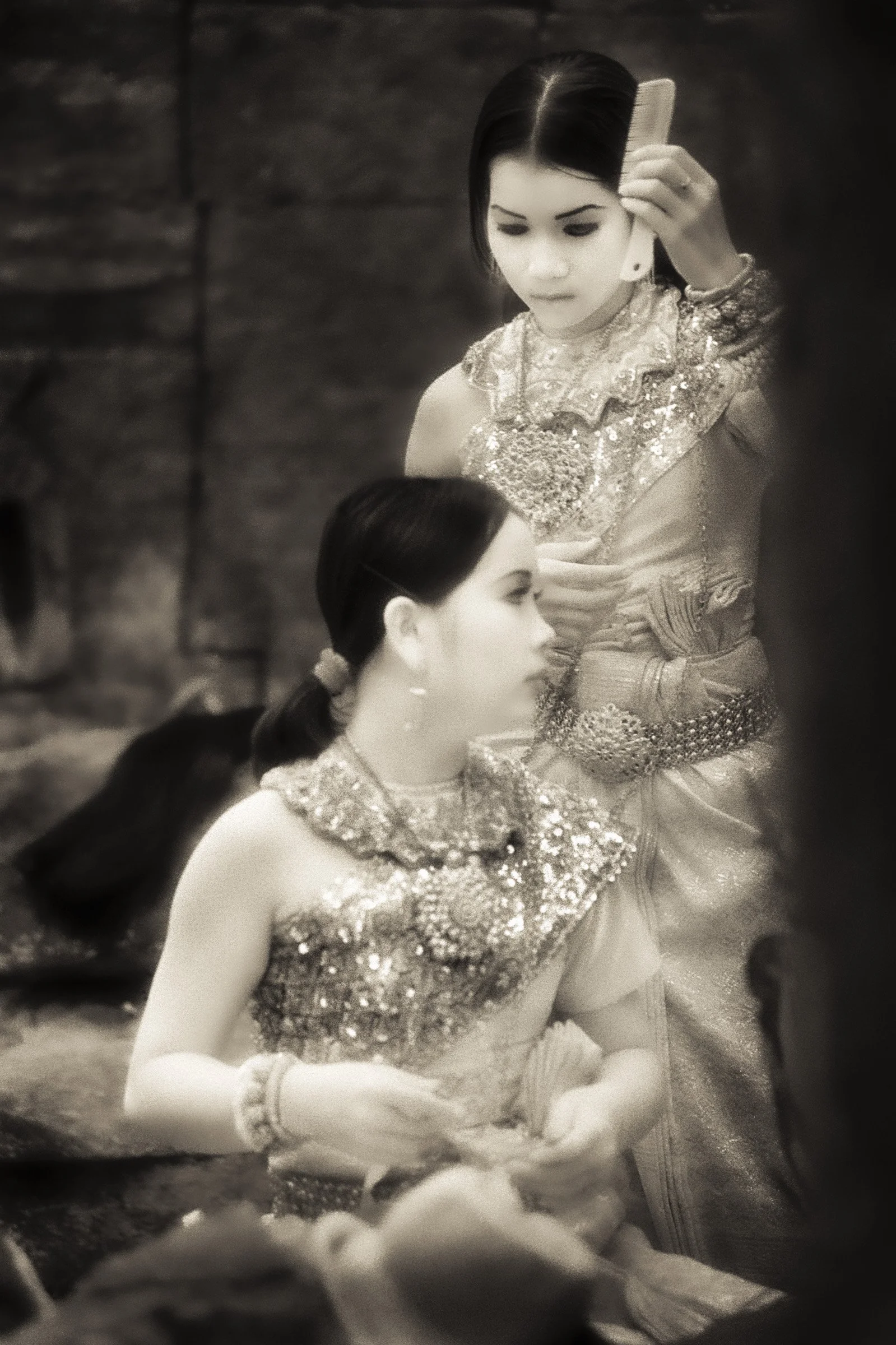
Apsara Dancers - Preah Khan, 2001, Archival Pigment Ink Print, Edition #1/40 50.8 x 76.2cm. (20 x 30in.)
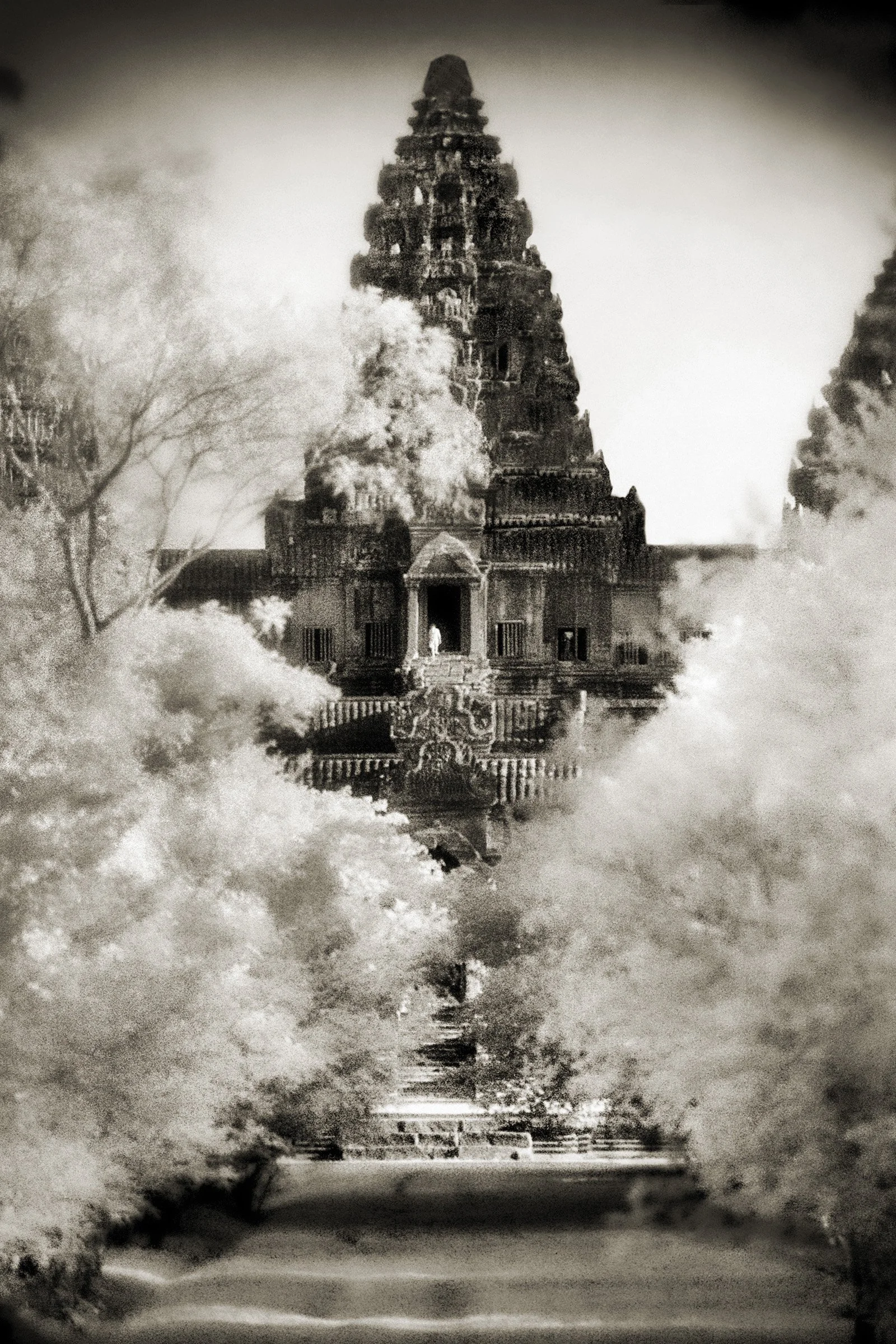
Angkor Wat Seen from the Northern Gate, 2001, Archival Pigment Ink Print, Edition #1, 30.48 x 45.72cm. (12 x 18in.)
Ta Prohm Courtyard, 2001 Archival Pigment Ink Print, Edition #5, 30.48 x 45.72cm. (12 x 18in.)
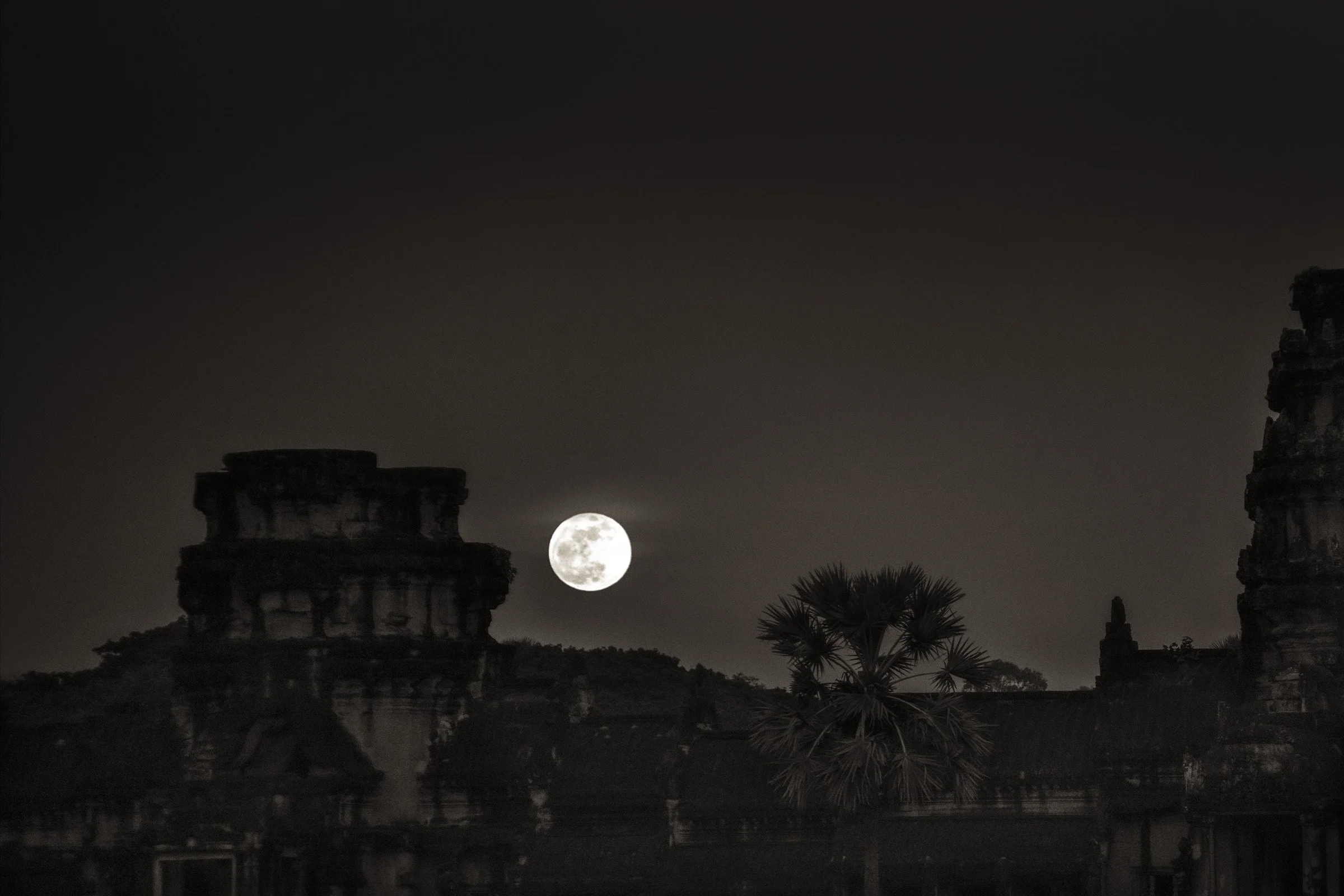
Moonrise Over Angkor Wat Wall, 2014, Archival Pigment Ink Print, Edition #1/40, 50.8 x 76.2cm. (20 x 30in.)
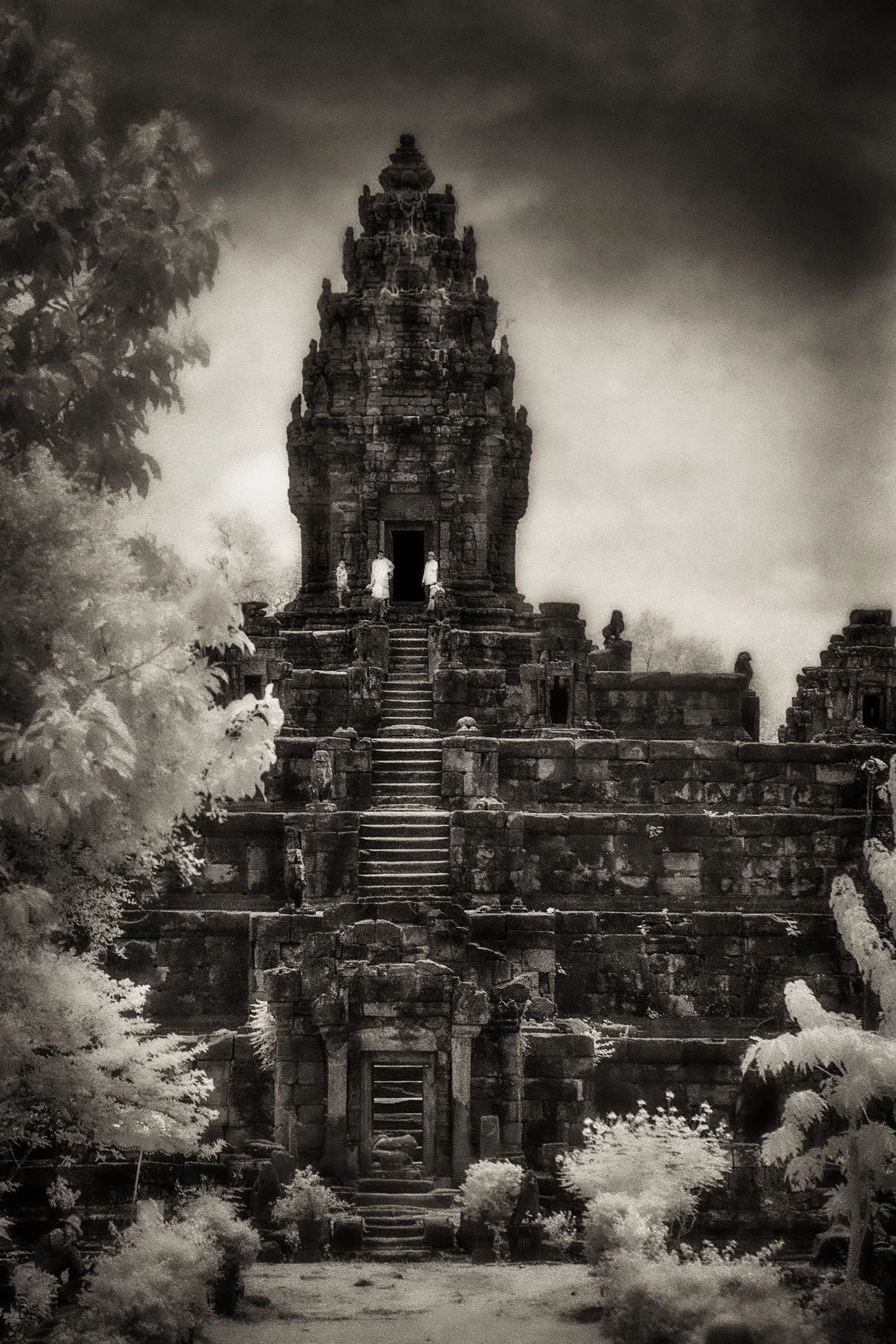
The Bakong - Ruluos Group, , 2001, Archival Pigment Ink Print, Edition #18, 30.48 x 45.72cm. (12 x 18in.)
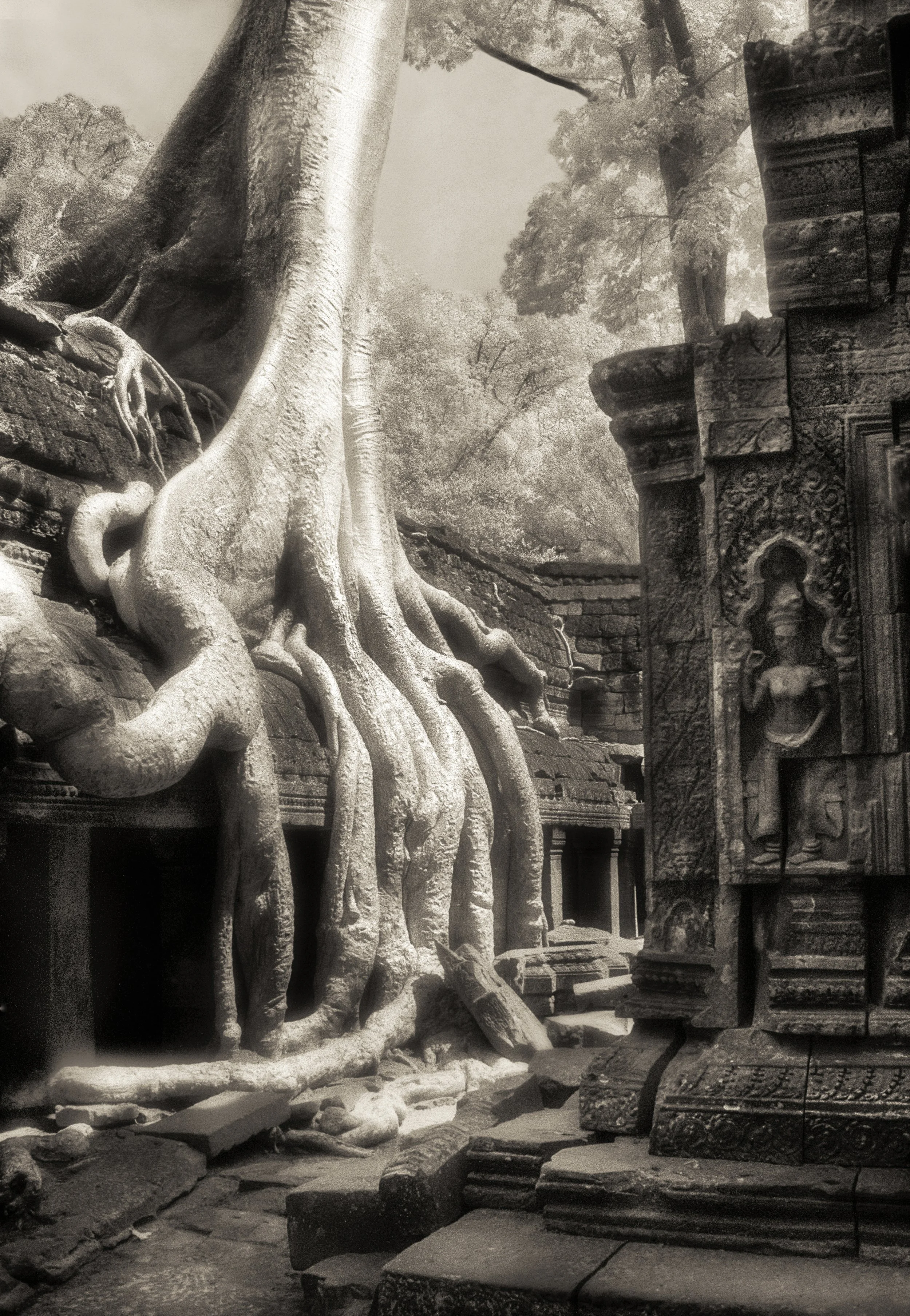
Cascading Roots - Ta Prohm, 2001, Archival Pigment Ink Print, Edition #4, 30.48 x 45.72cm. (12 x 18in.)
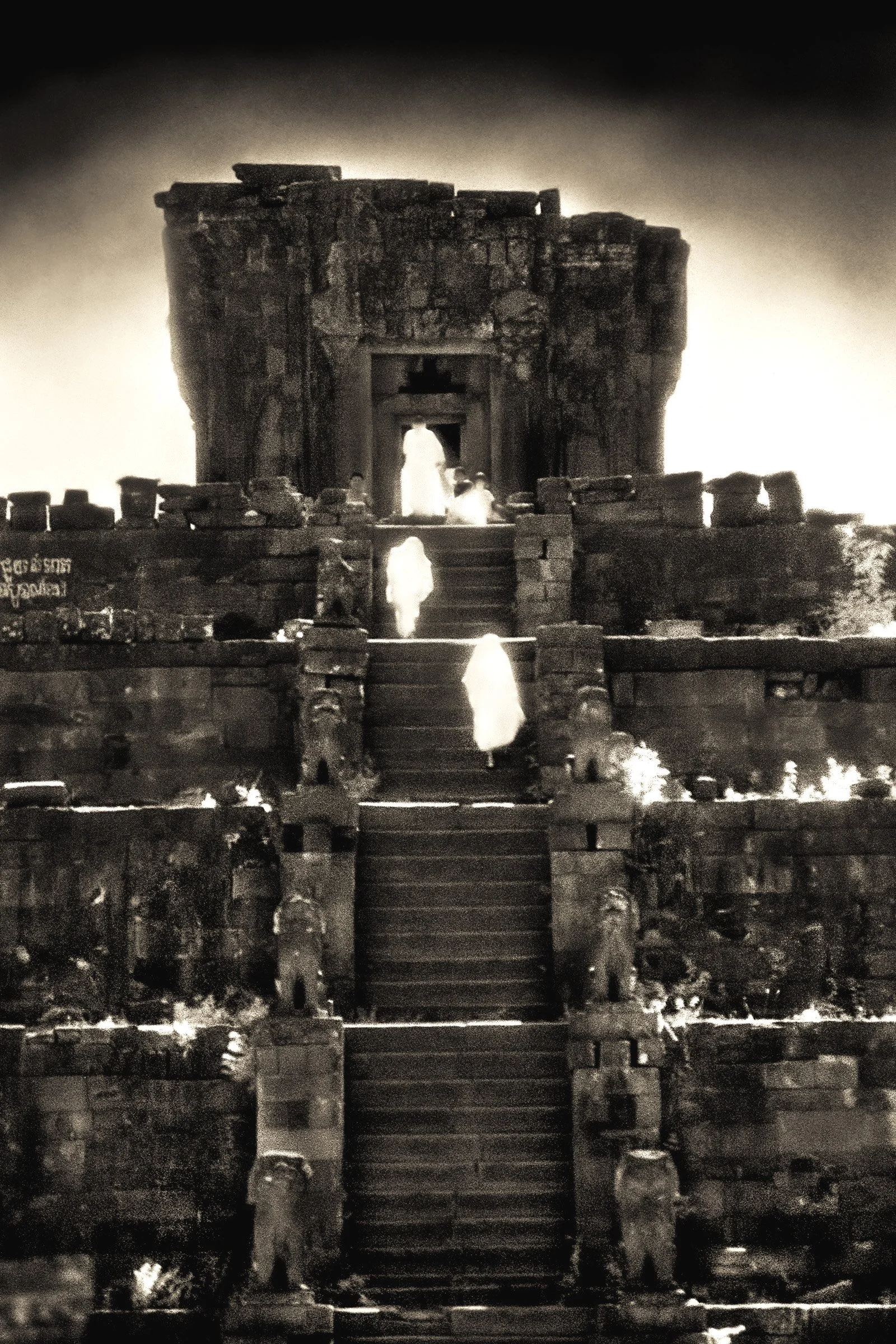
Monks Ascending the Stairway - Phnom Bakheang, 2001, Archival Pigment Ink Print, Edition #23, 30.48 x 45.72cm. (12 x 18in.)
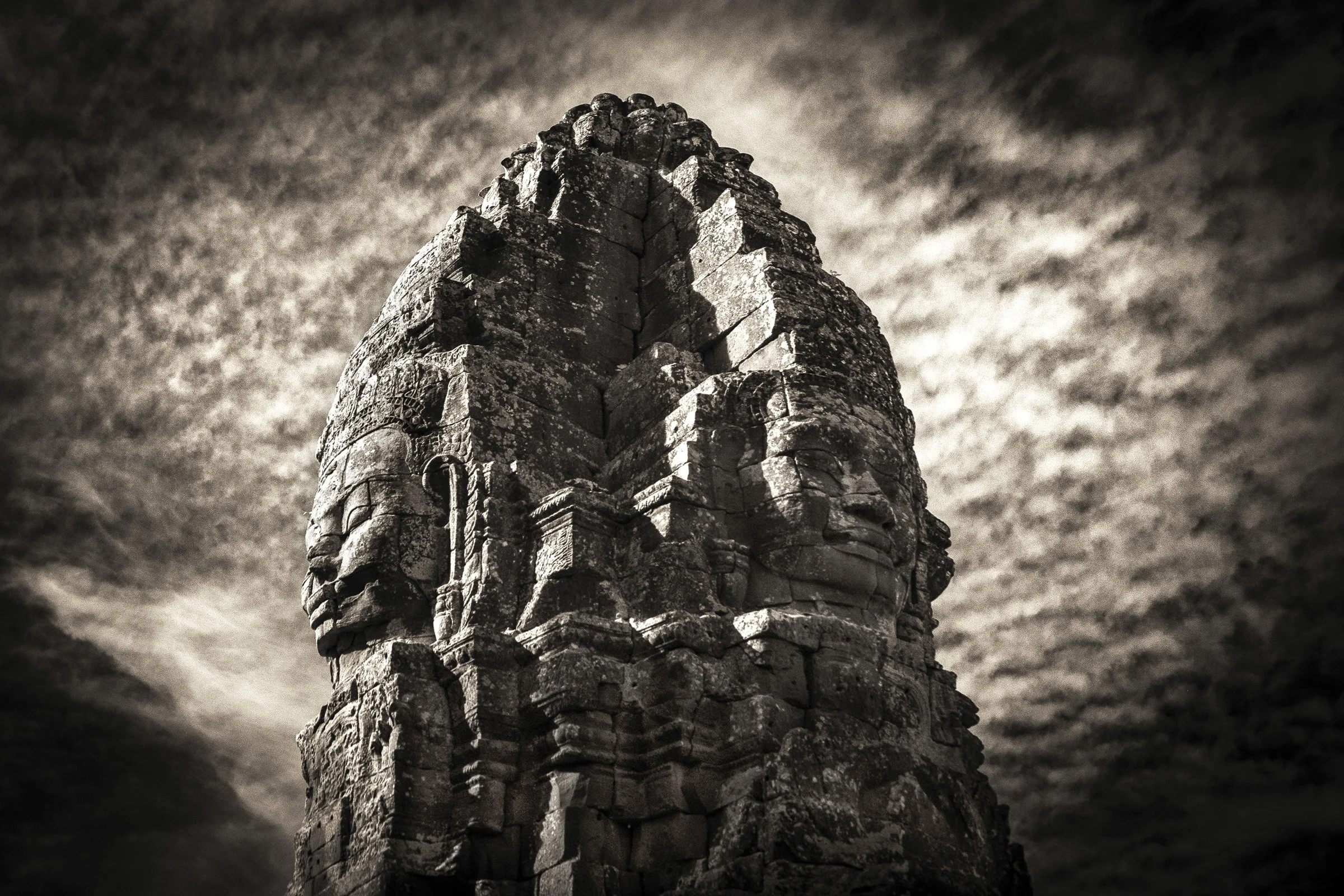
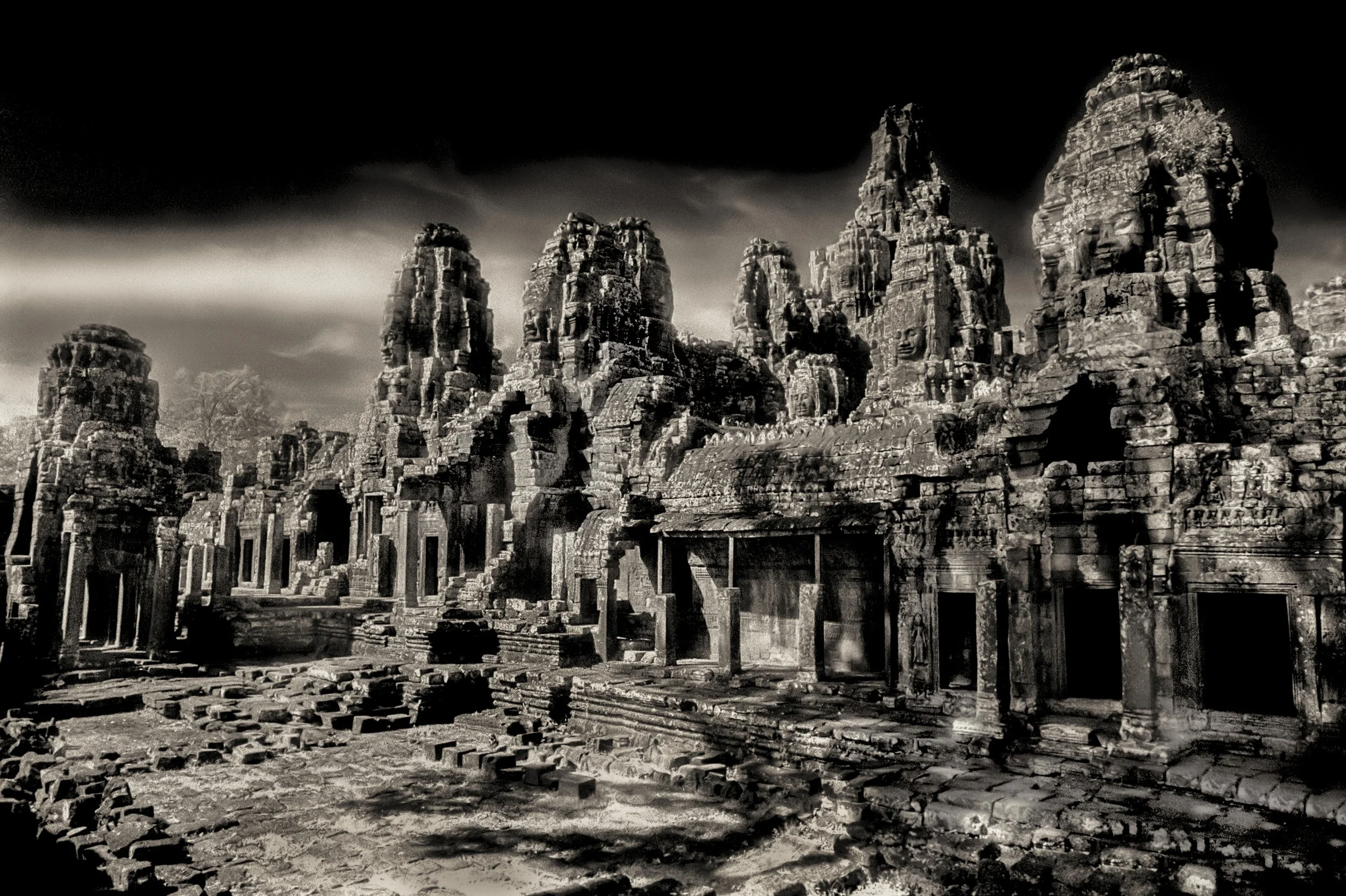
Bayon Tower - The Bayon, 2010, Archival Pigment Ink Print, Edition #3/40, 50.8 x 76.2cm. (20 x 30in.)
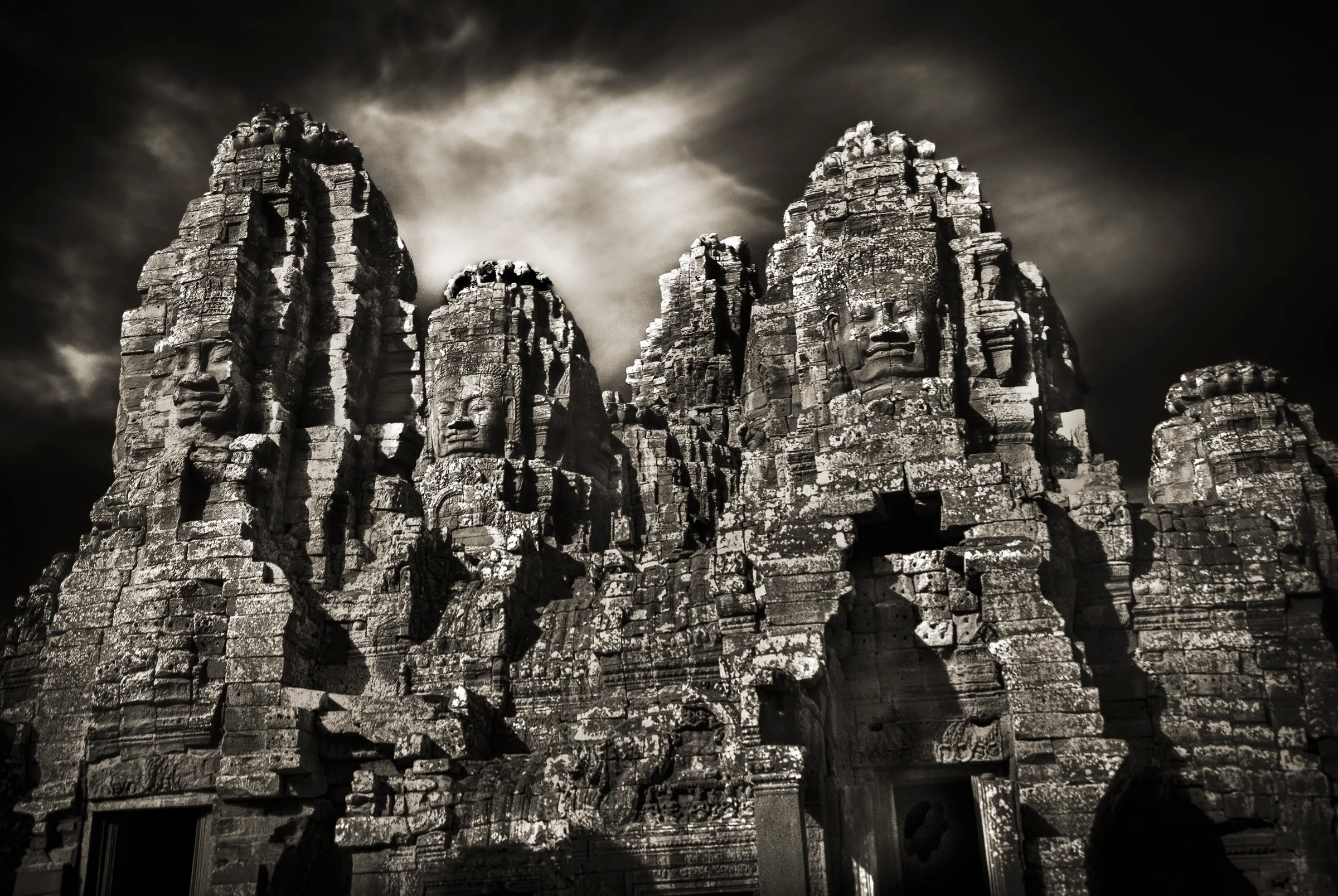
Bayon Heads - The Bayon, 2014, Archival Pigment Ink Print, Edition #8, 30.48 x 45.72cm. (12 x 18in.)
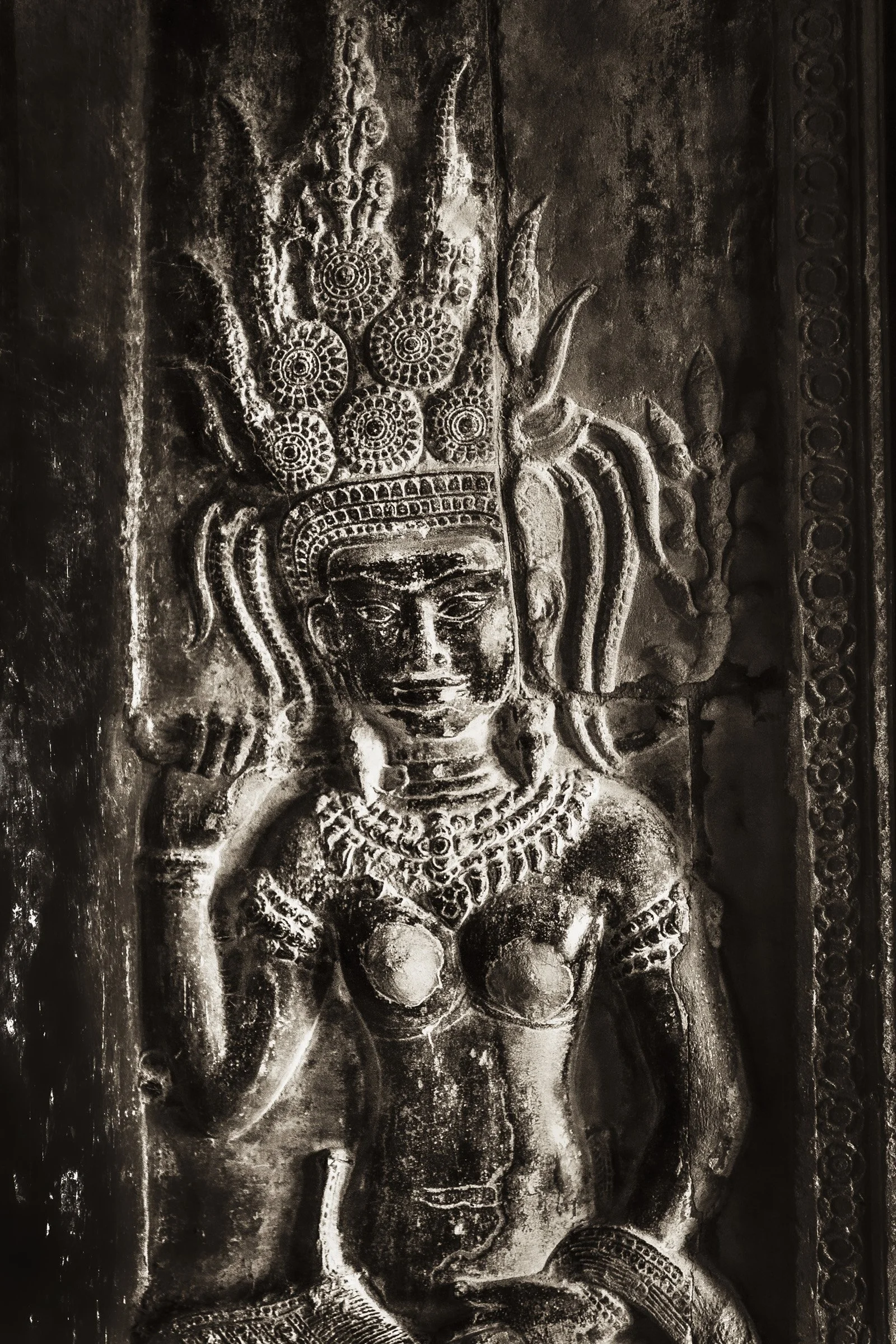
Black Apsara - Angkor Wat, 2010, Archival Pigment Ink Print, Edition #3, 30.48 x 45.72cm. (12 x 18in.)
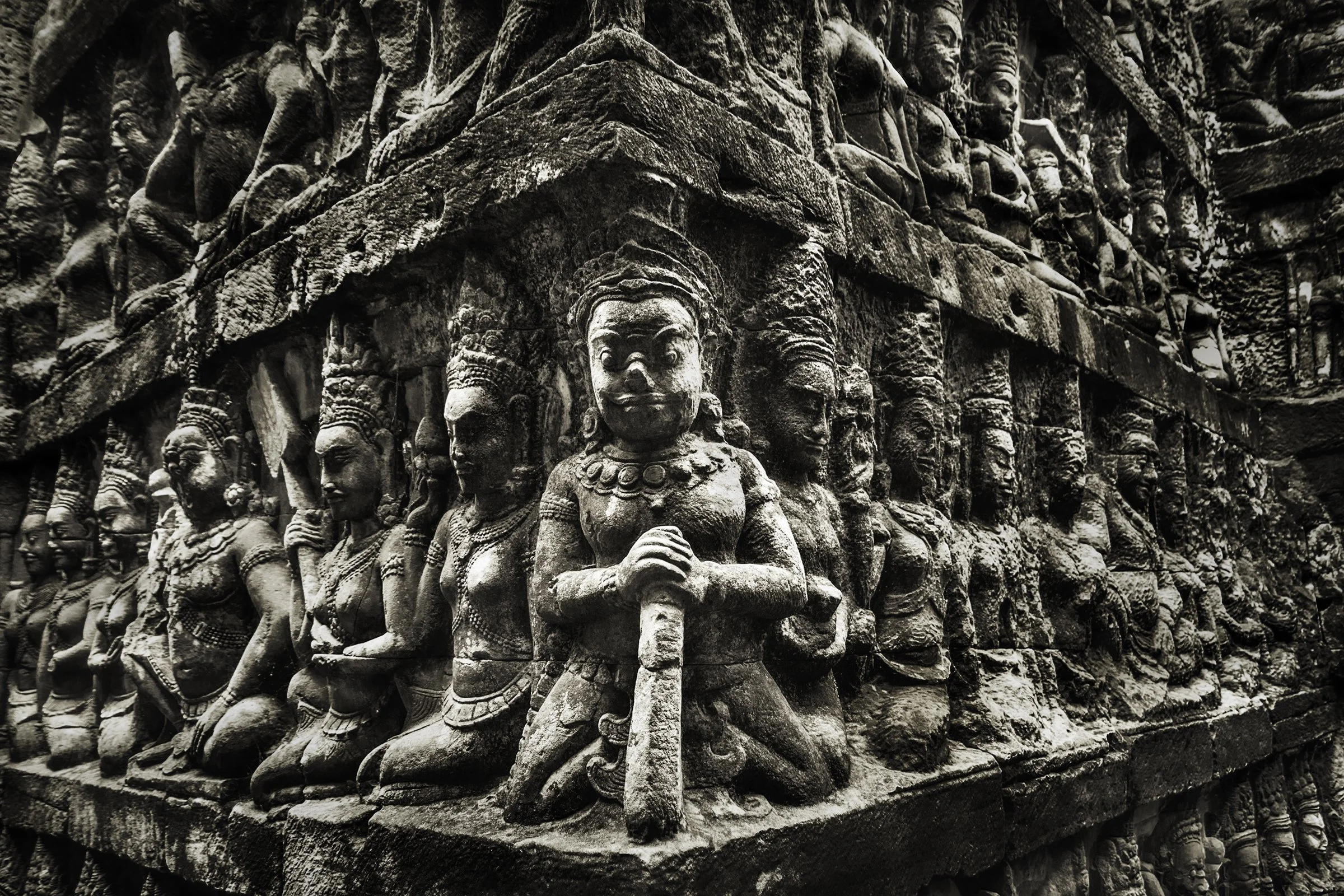
Demons in the Gallery - Terrace of the Leper King, 2014, Archival Pigment Ink Print, Edition #1, 30.48 x 45.72cm. (12 x 18in.)
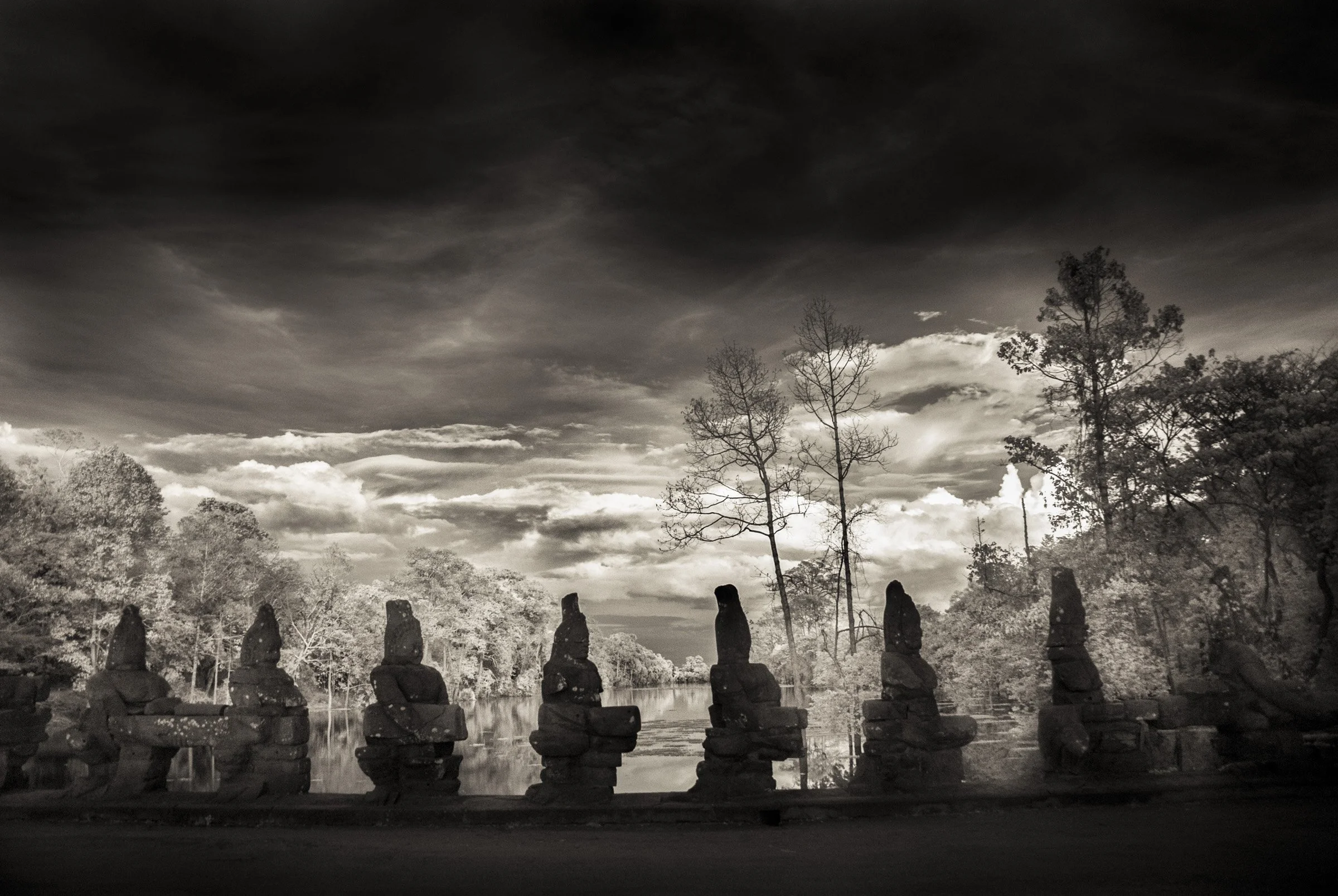
Along the Causeway - Angkor Thom, 2010, Archival Pigment Ink Print, Edition #1, 30.48 x 45.72cm. (12 x 18in.)
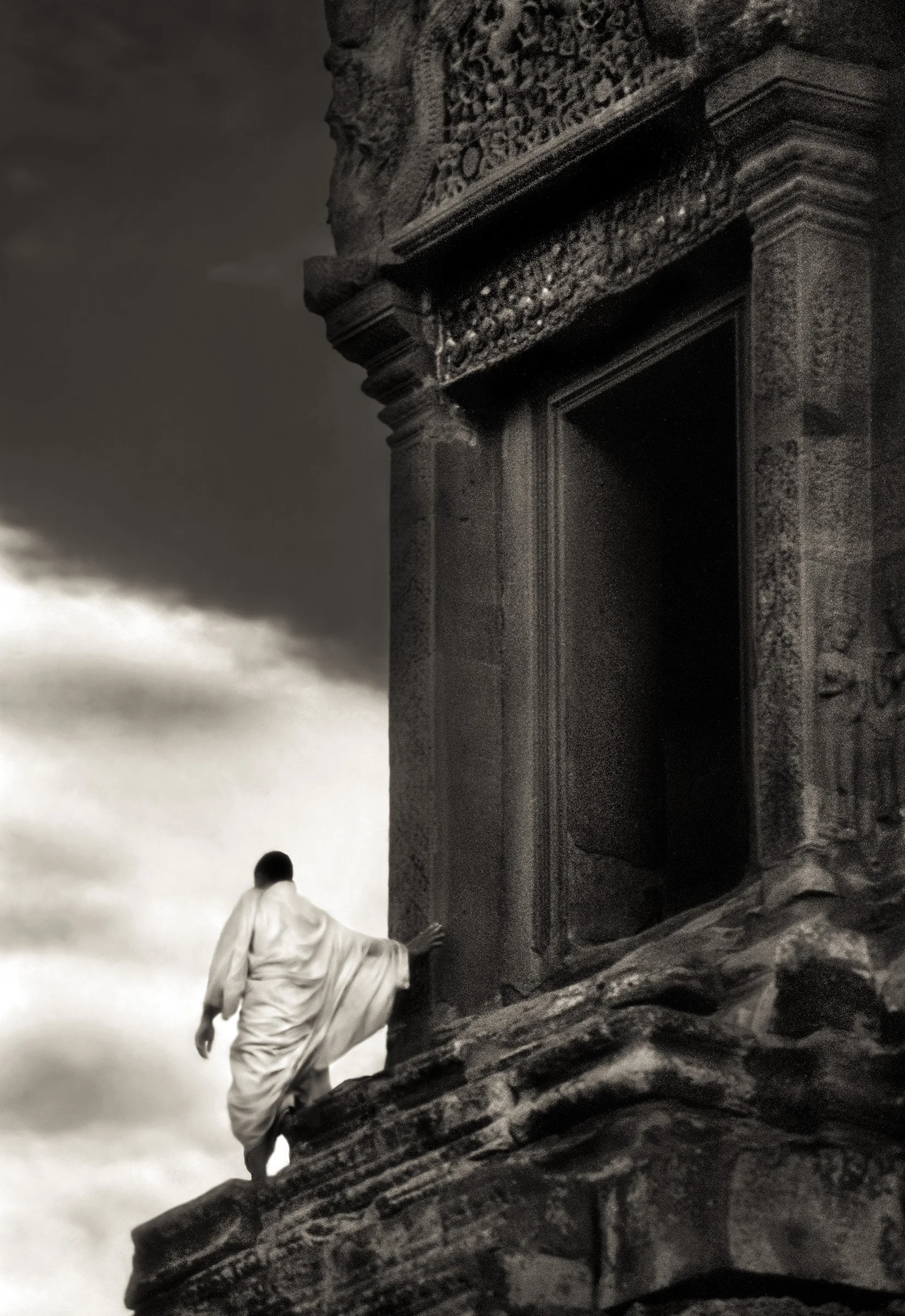
Monk in the Wind - Angkor Wat, 2001, Archival Pigment Ink Print, Edition #68, 30.48 x 45.72cm. (12 x 18in.)
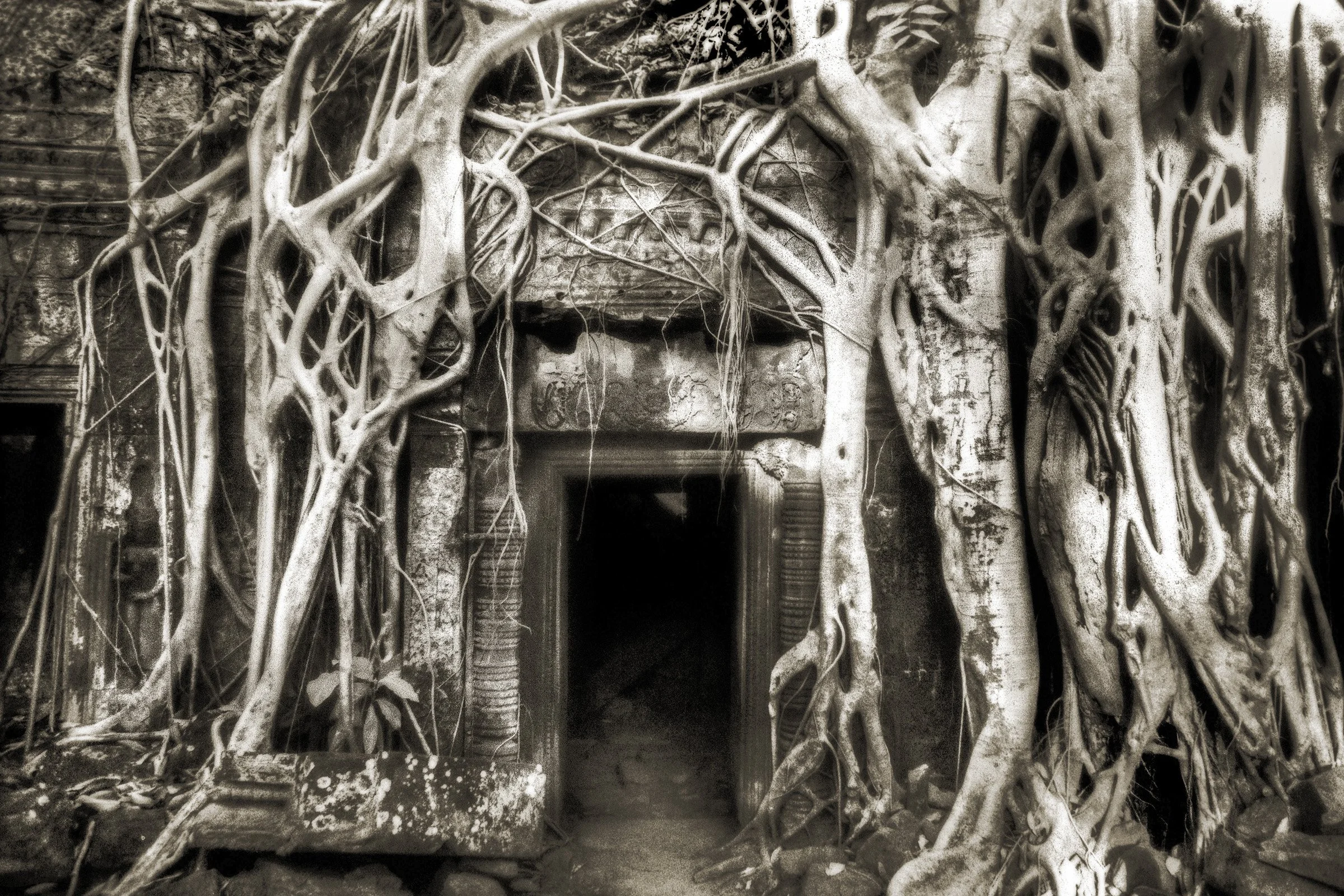
Roots Swallowing a Doorway - Ta Prohm, 2001, Archival Pigment Ink Print, Edition #1, 30.48 x 45.72cm. (12 x 18in.)
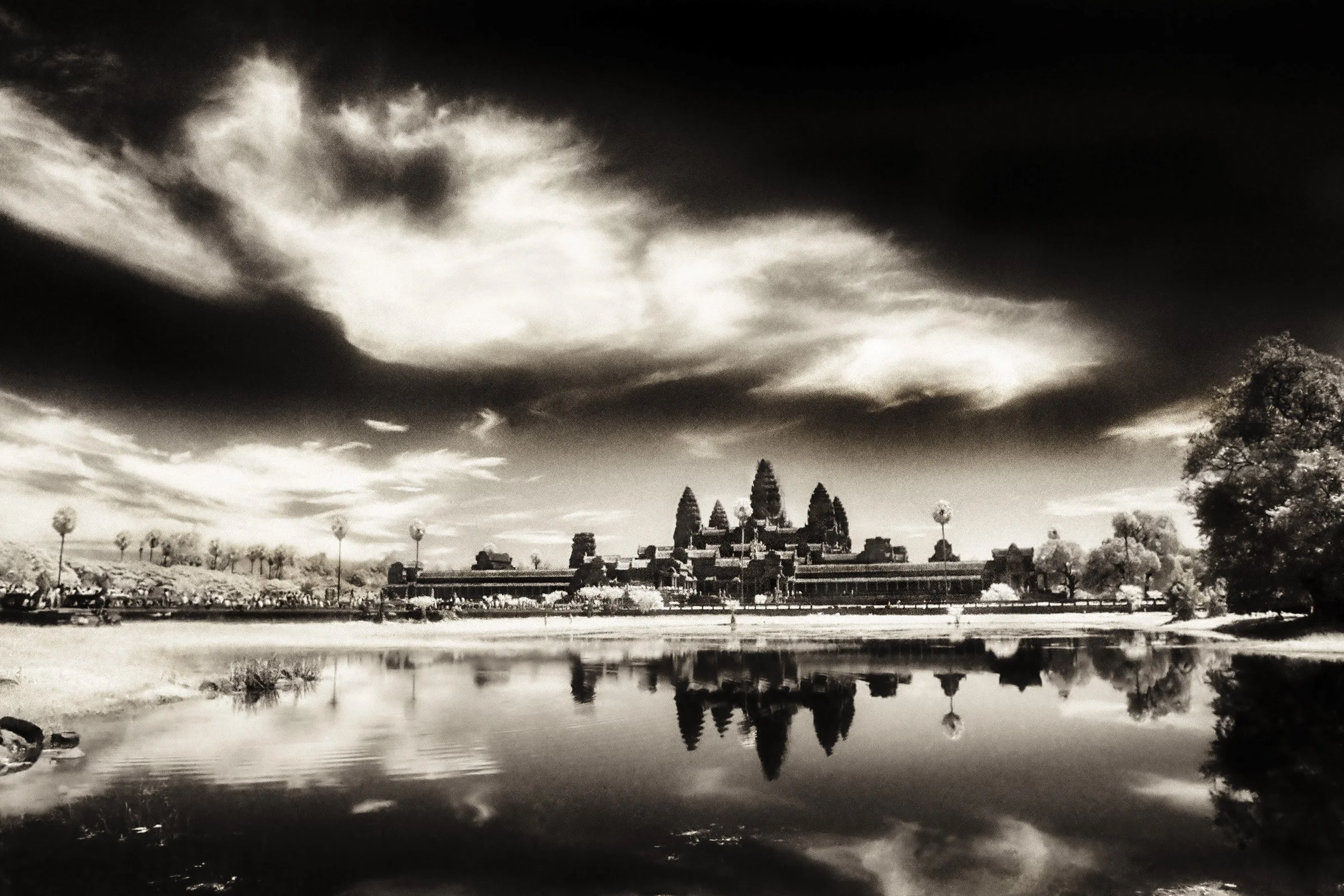
Solar Eclipse - Angkor Wat, 1995, Archival Pigment Ink Print, Edition #1/40, 50.8 x 76.2cm. (20 x 30in.)
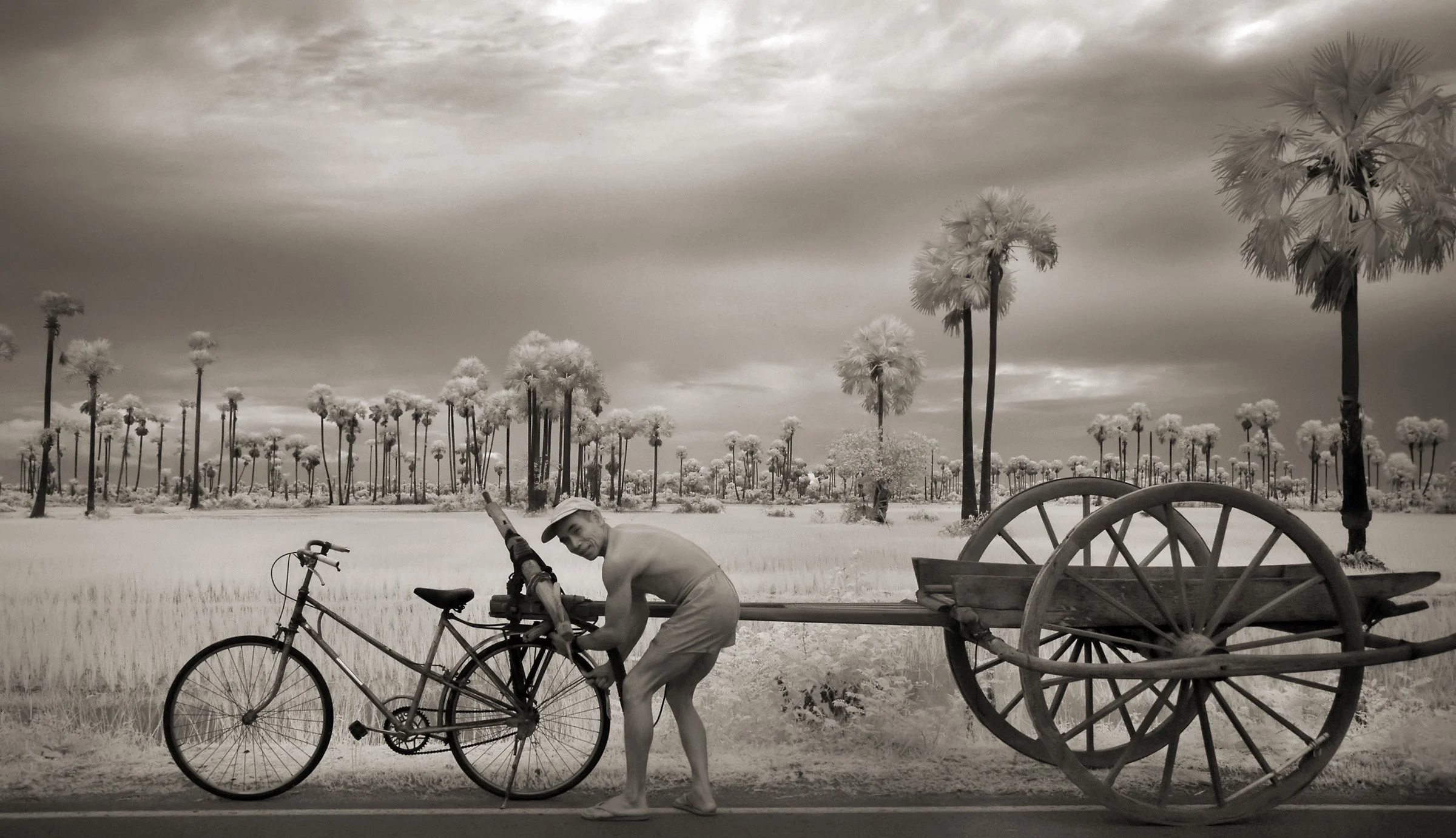
Smiling Face - North Gate Angkor Thom, 2014, Archival Pigment Ink Print, Edition #1, 30.48 x 45.72cm. (12 x 18in.)
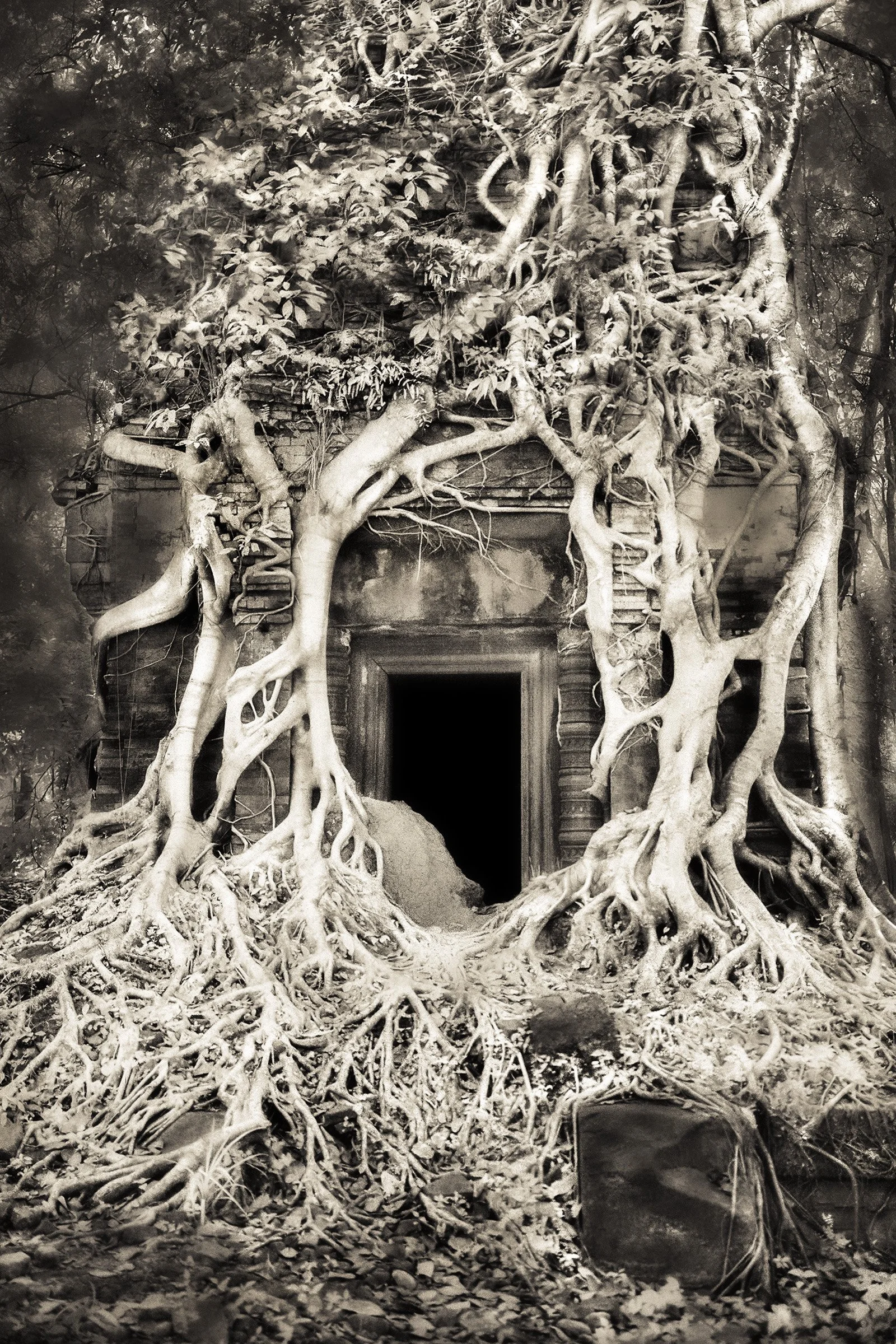
Tangled Roots - Koh Ker, 2014, Archival Pigment Ink Print, Edition #8/40, 50.8 x 76.2cm. (20 x 30in.)
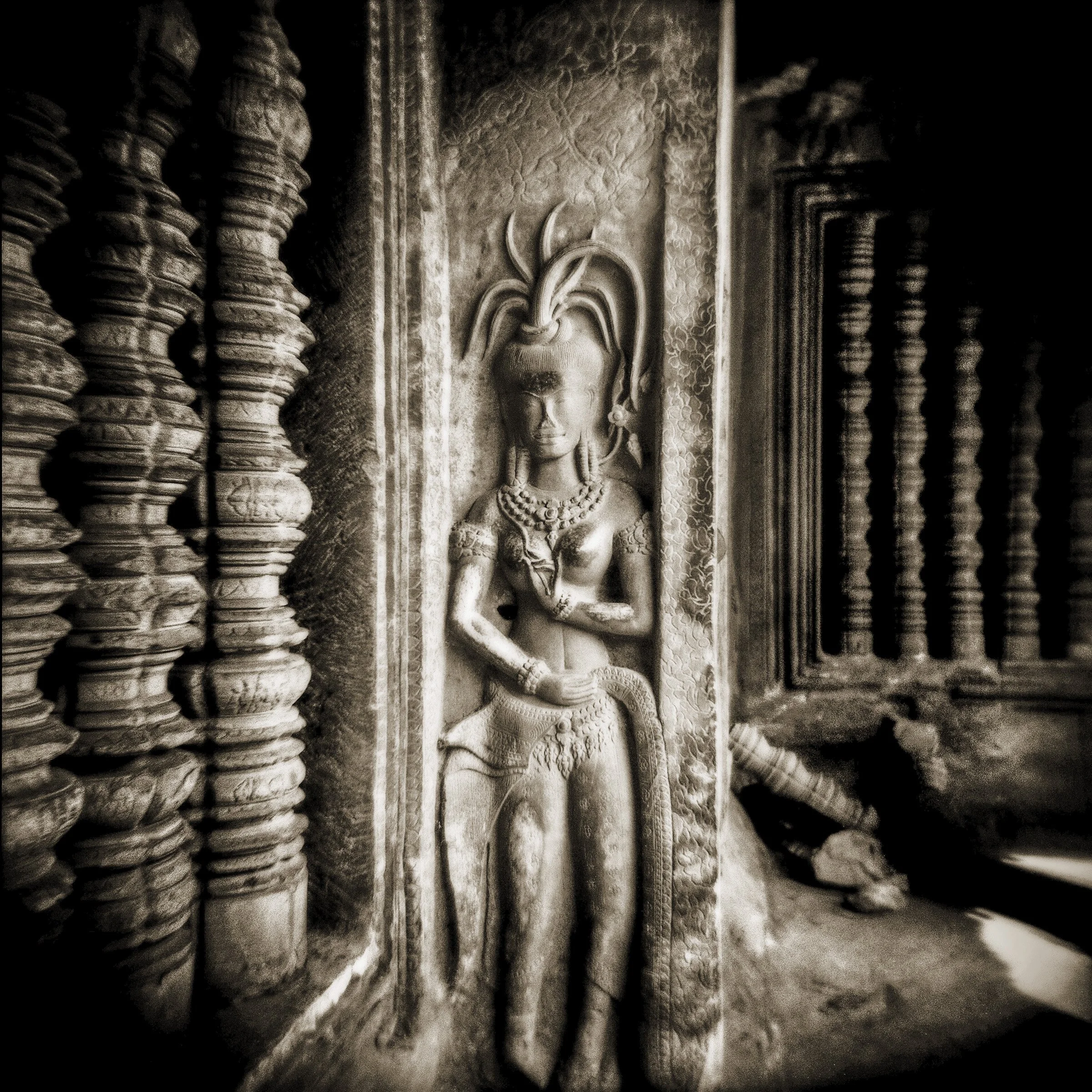
Apsara Carving in Angkor Wat, 2010, Archival Pigment Ink Print, Edition #1, 38 x 38cm. (15 x 15in.)
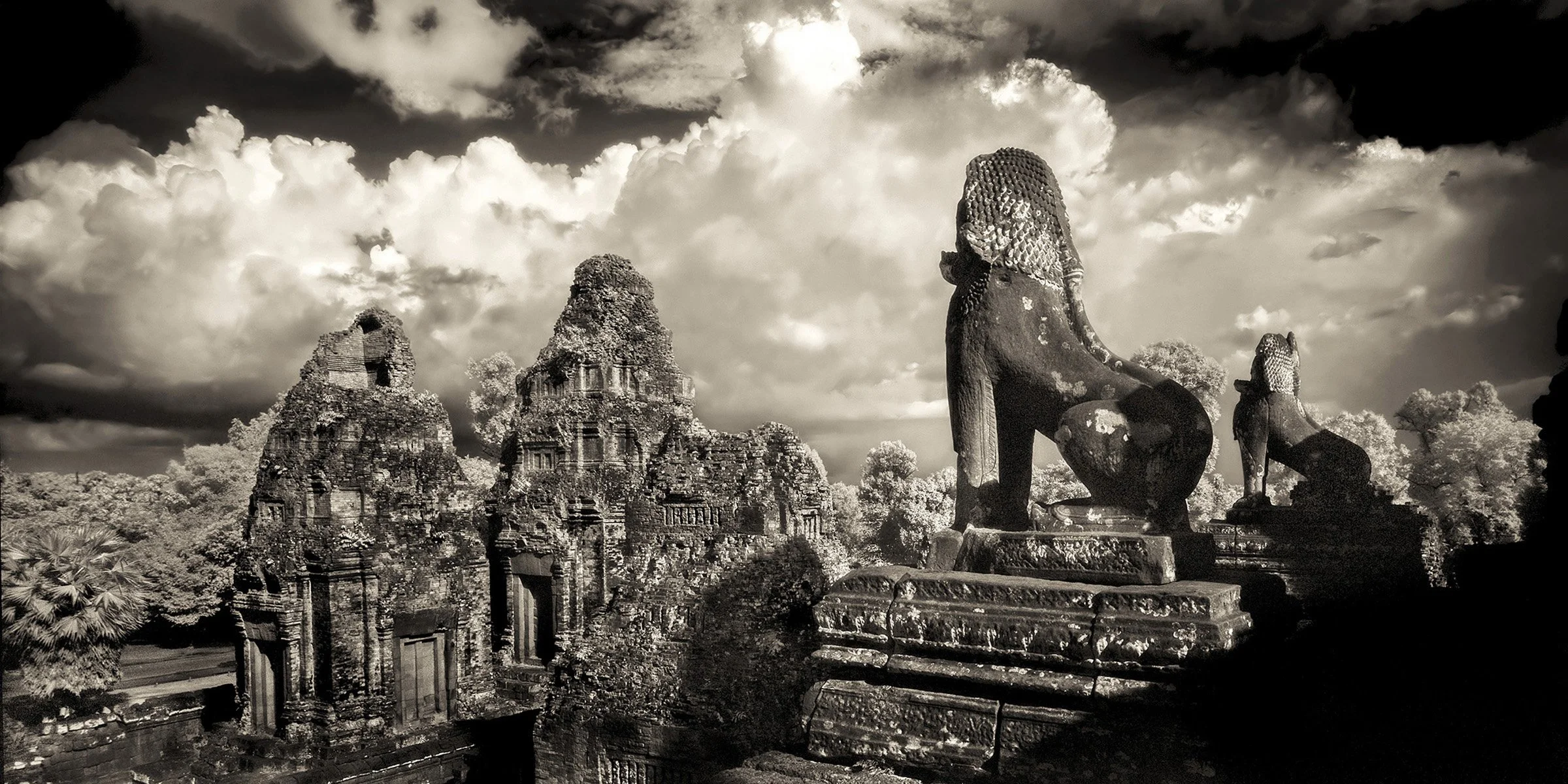
Temple Lions and Clouds - Pre Rup - Angkor, 2008, Archival Pigment Ink Print, Edition #77 & #78
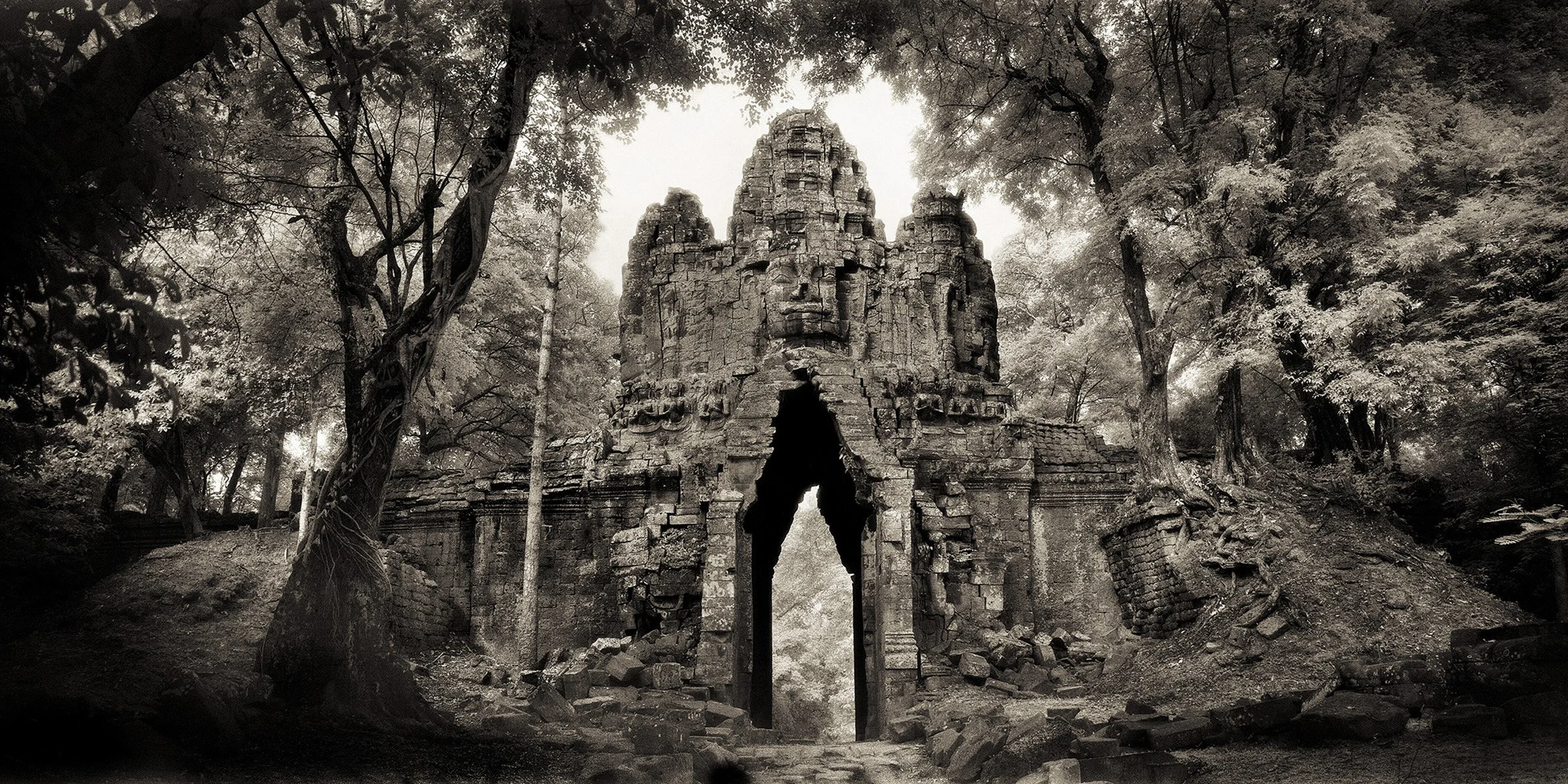
The West Gate - Angkor Thom - Angkor, 2008, Archival Pigment Ink Print, Edition #98 and #99, 25.4 x 50.8cm. (10 x 20in.)
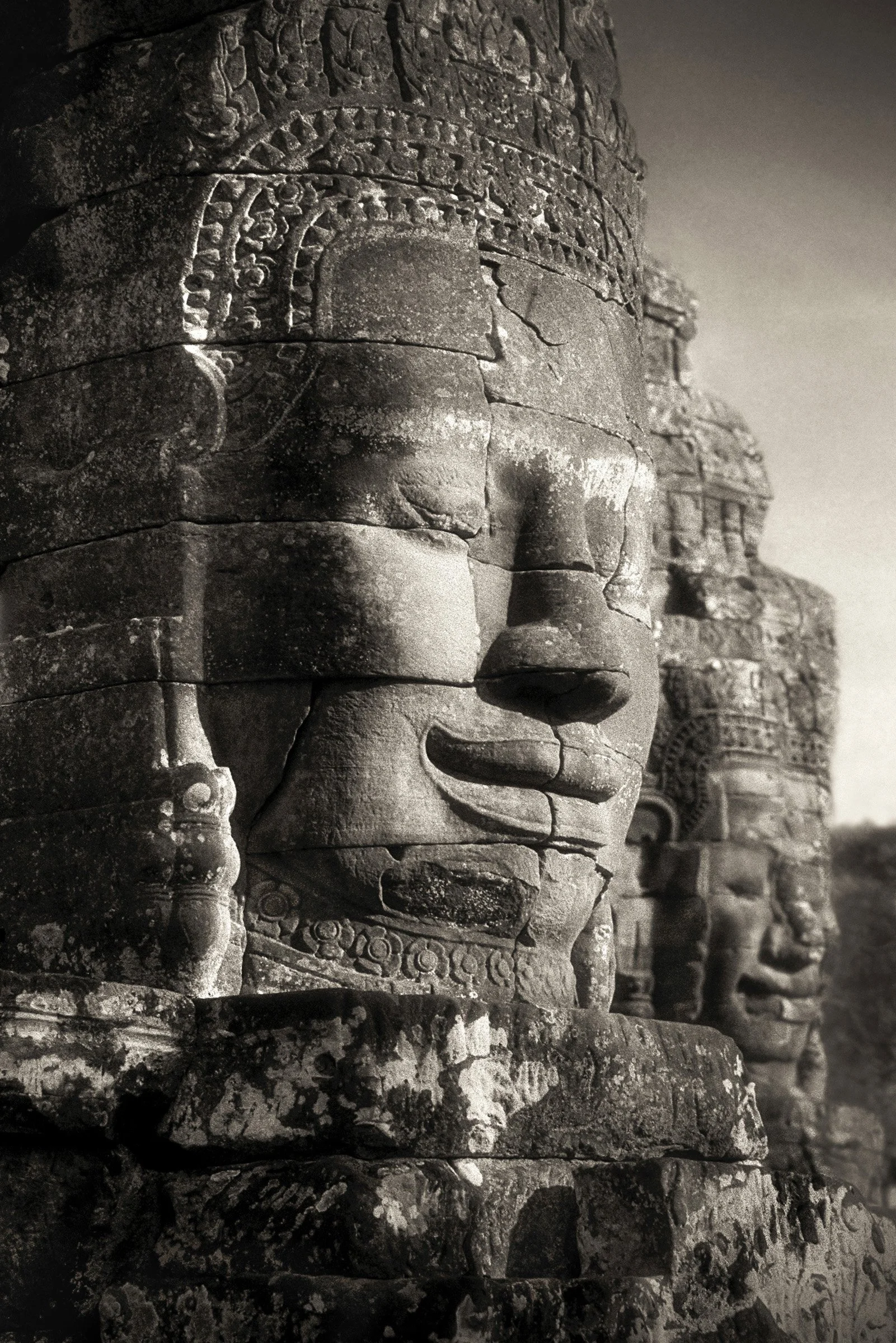
Two Faces - The Bayon - Angkor Thom, 2010, Archival Pigment Ink Print, Edition #54, 30.48 x 45.72cm. (12 x 18in.)
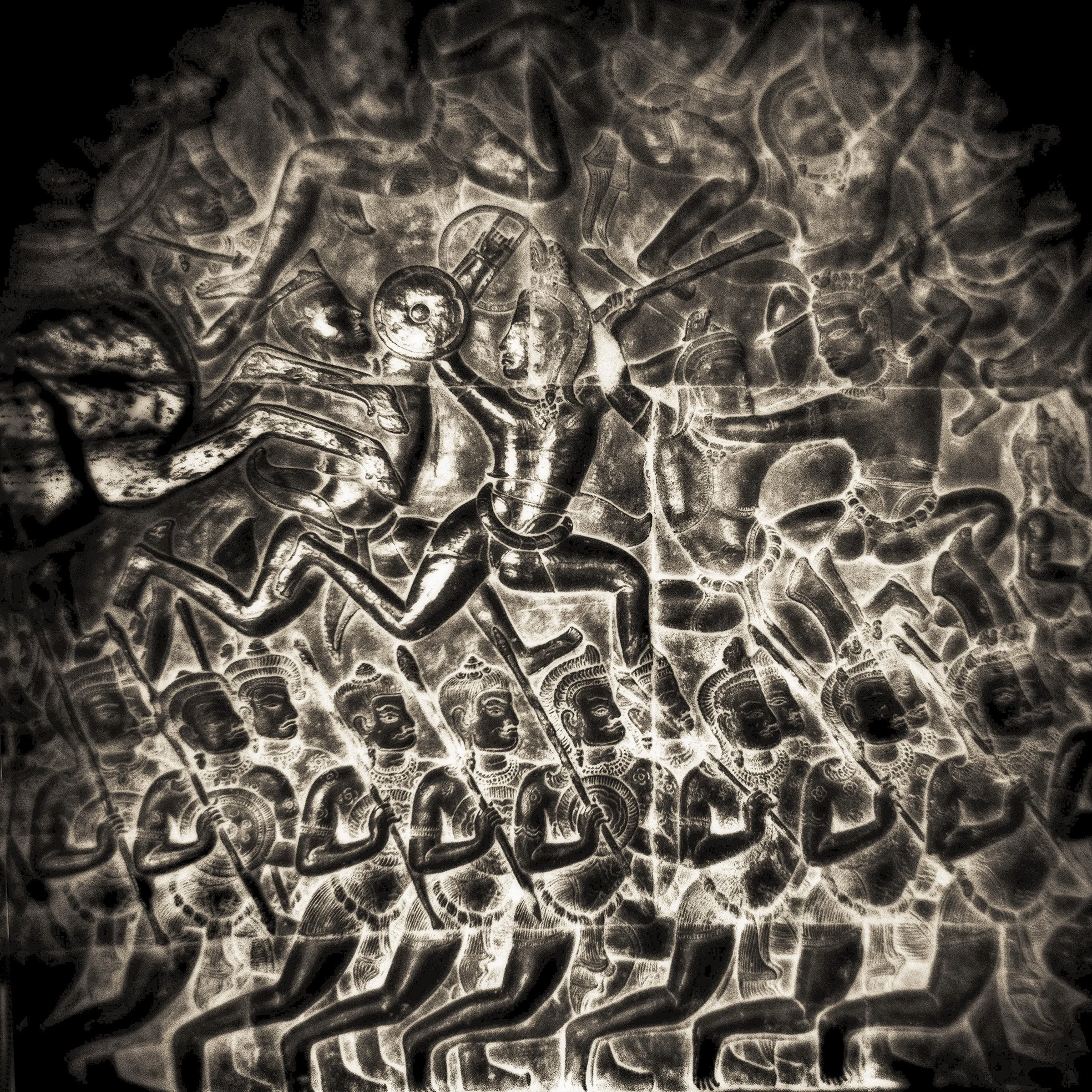
Warriors, 2009, Archival Pigment Ink Print, Edition #1, 38 x 38cm. (15 x 15in.)
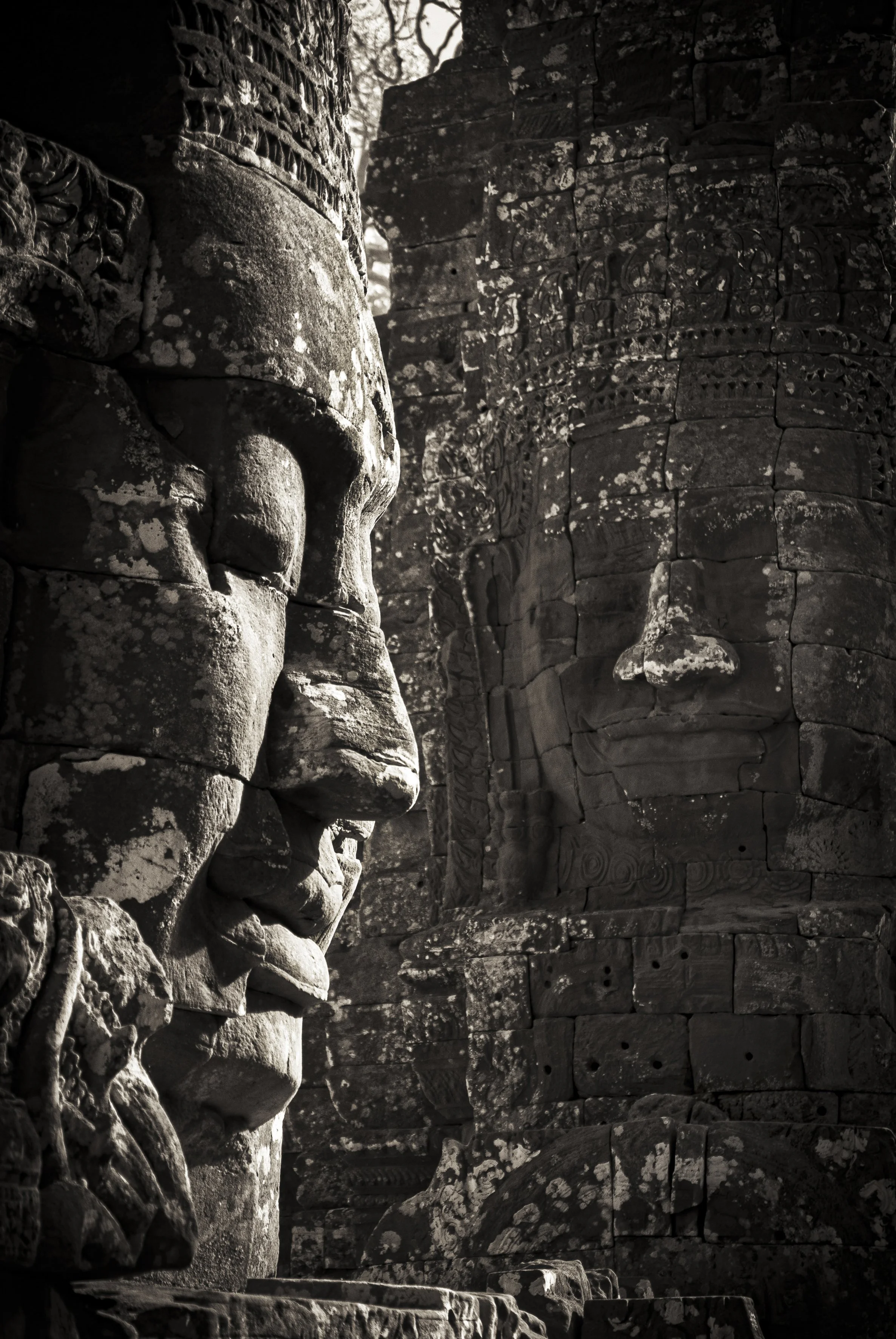
Bayon Profile, 2010, Archival Pigment Ink Print, Edition #1/1, 101 x 151cm, collection of FCC Angkor By Avani
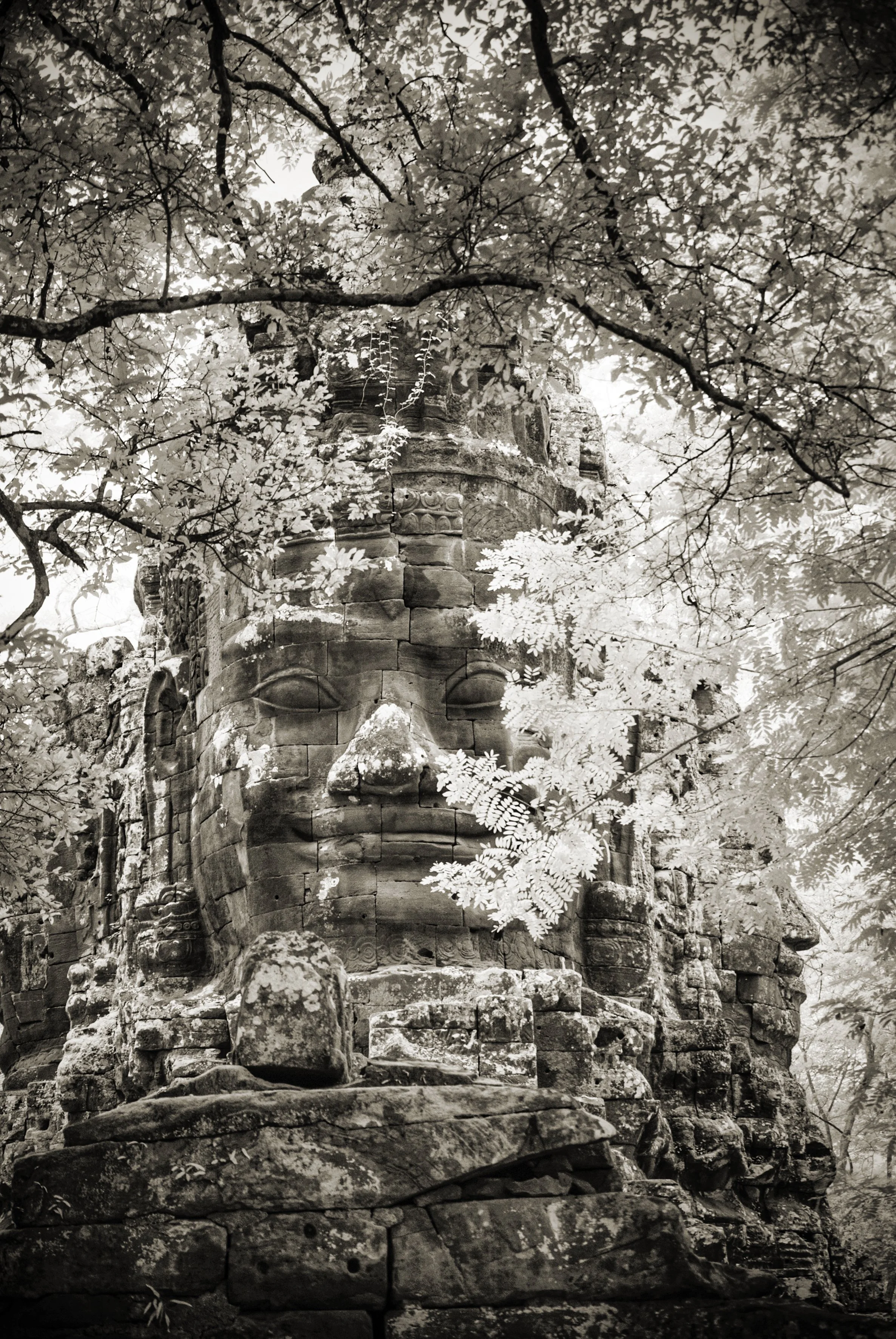
Eastern Entrance - Preah Khan, 2012, Archival Pigment Ink Print, Edition #11, 30.48 x 45.72cm. (12 x 18in.)
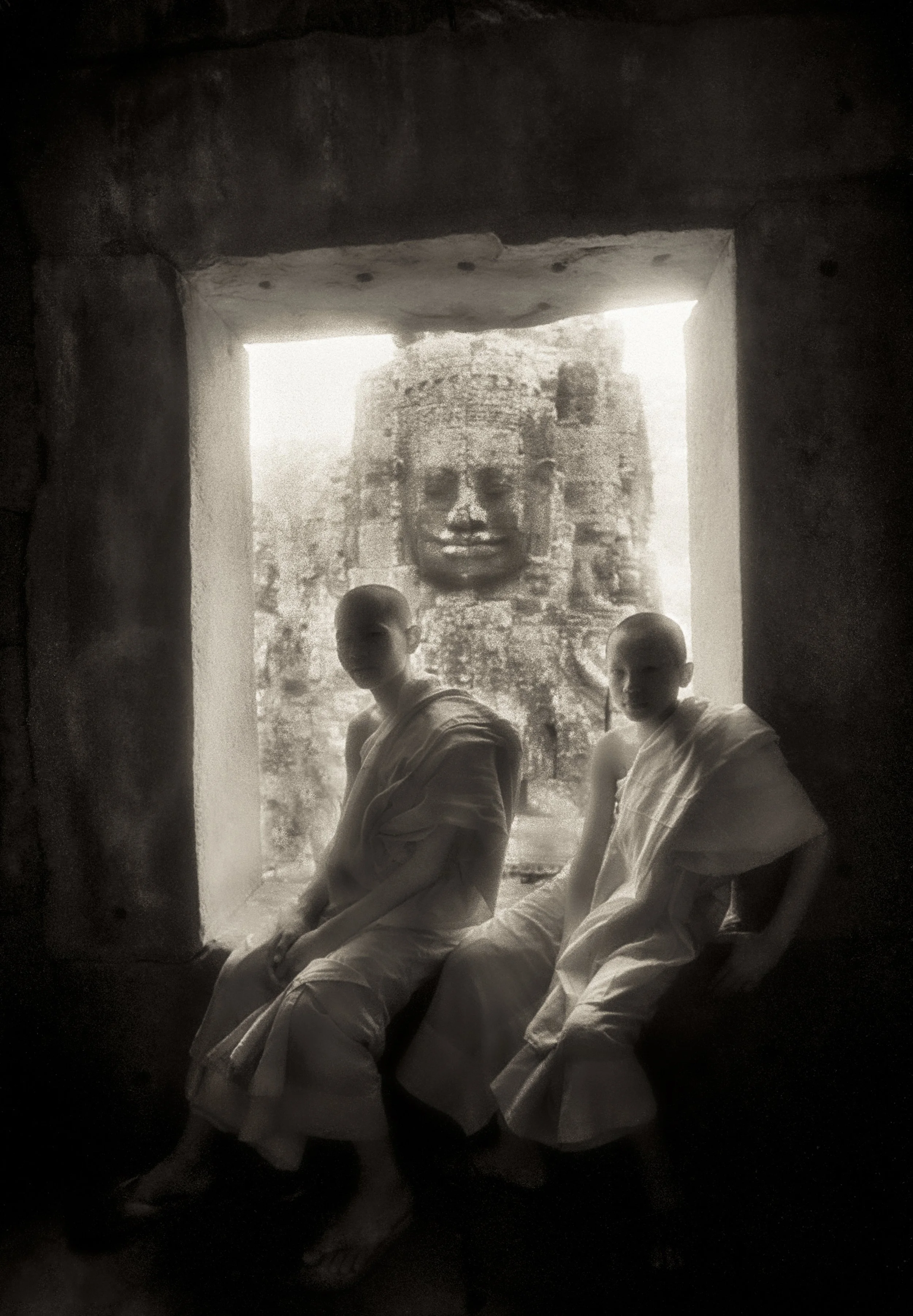
Monks in the Window - The Bayon, 2001, Archival Pigment Ink Print, Edition #1, 30.48 x 45.72cm. (12 x 18in.)
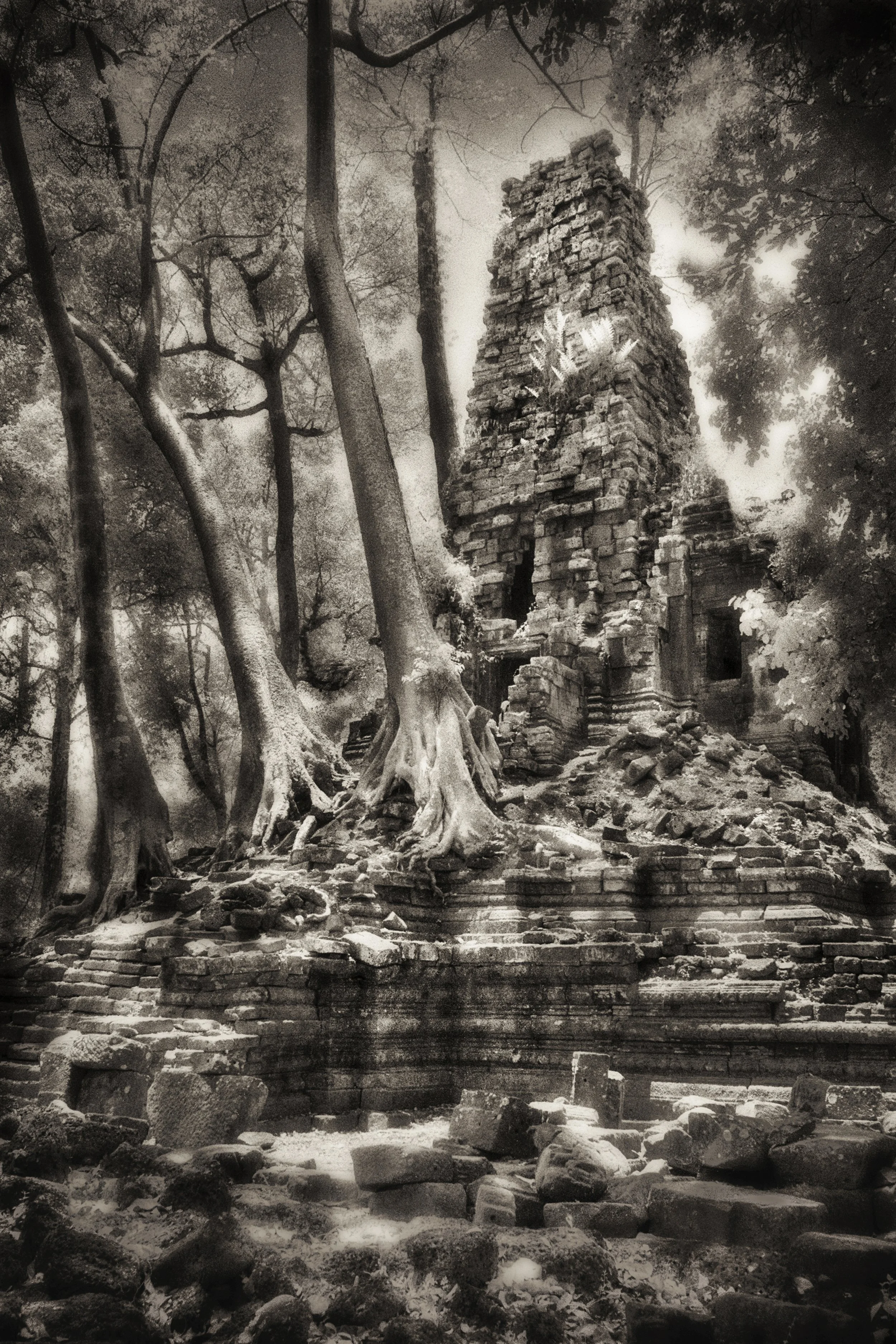
Preah Palilay - Angkor Thom, 2000, Archival Pigment Ink Print, Edition #1/40, 50.8 x 76.2cm. (20 x 30in.)
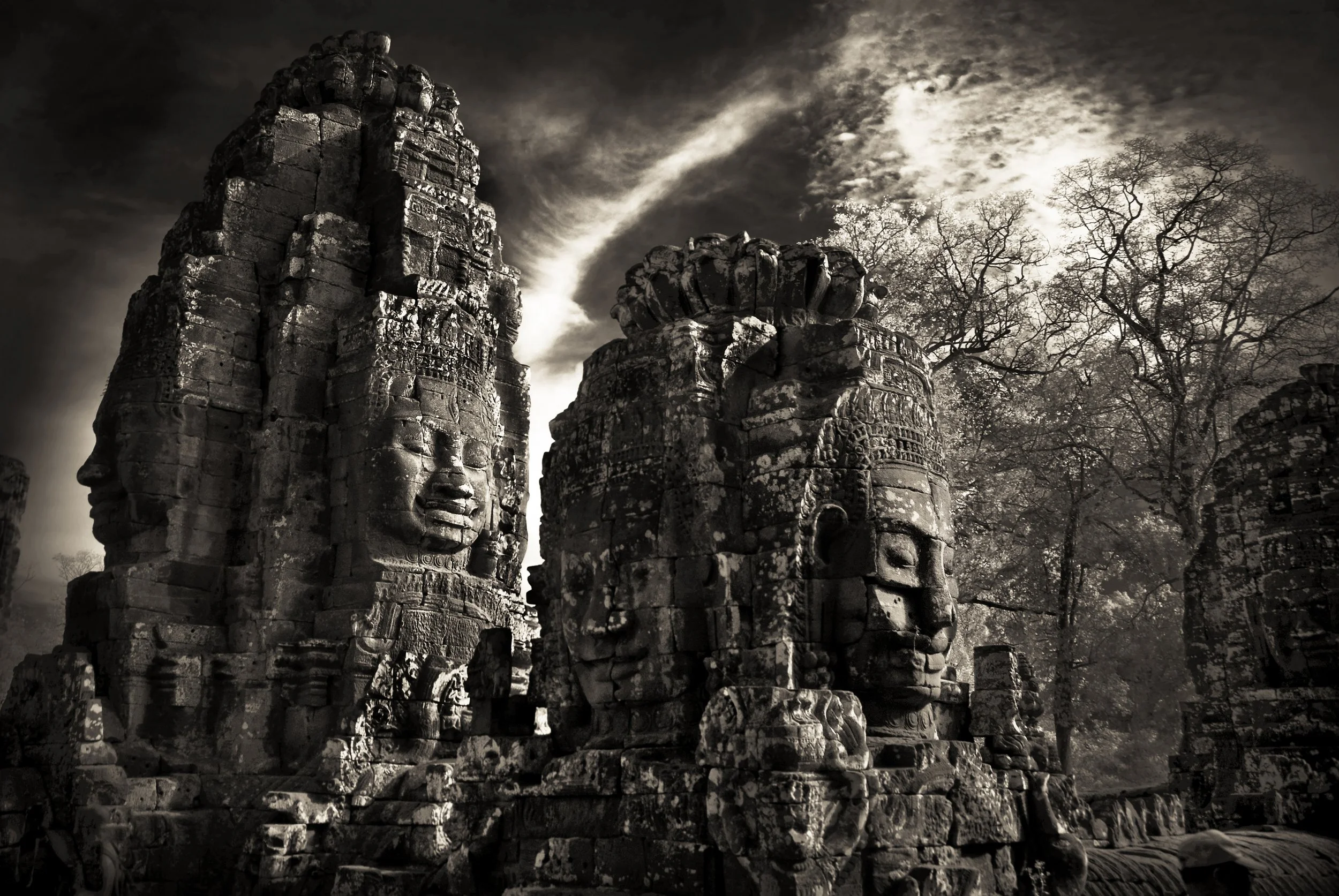
Two Towers - The Bayon, 2014, Archival Pigment Ink Print, Edition #16/40, 50.8 x 76.2cm. (20 x 30in.)
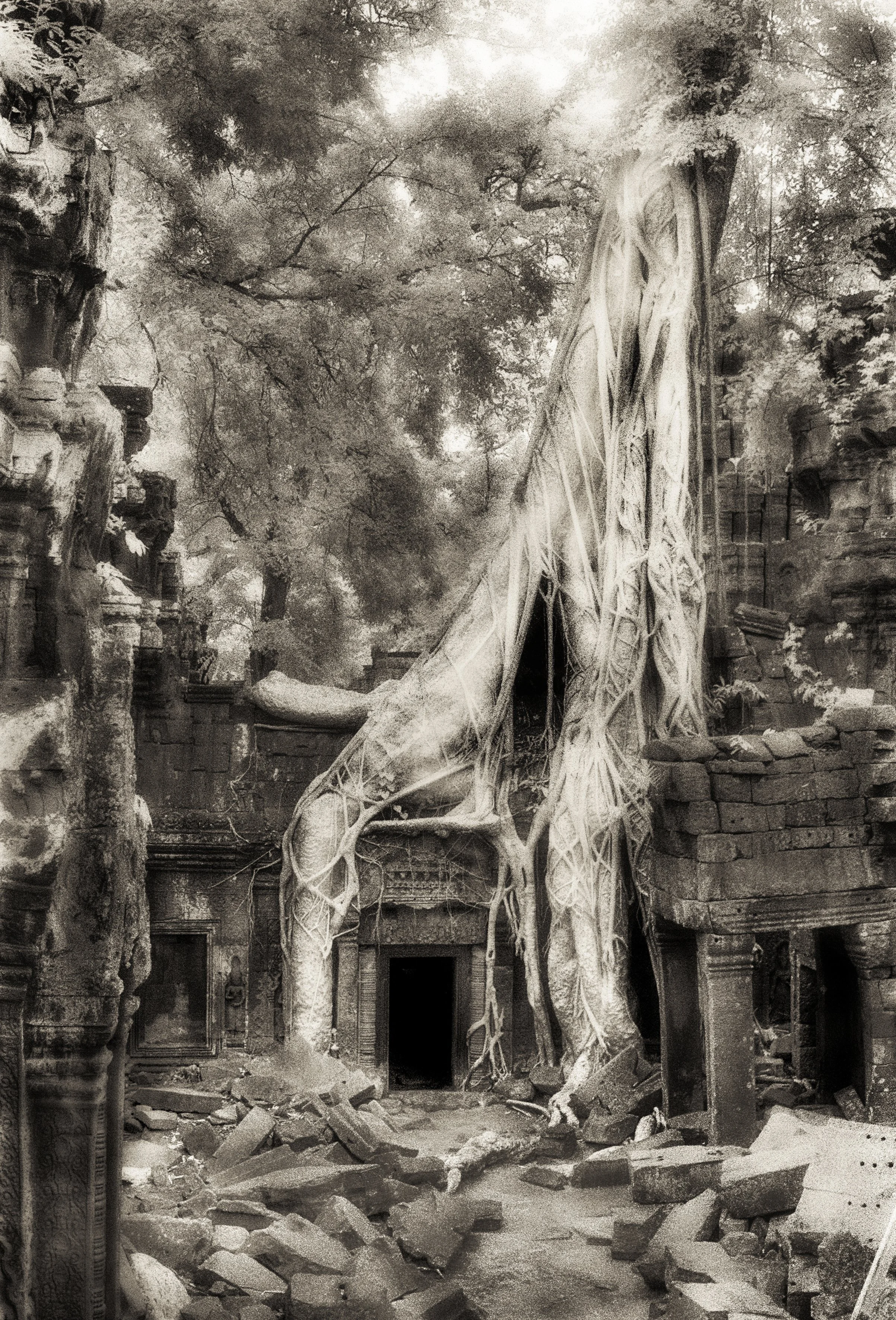
Roots Swallowing a Doorway - Ta Prohm, 2001, Archival Pigment Ink Print, Edition #1, 30.48 x 45.72cm. (12 x 18in.)
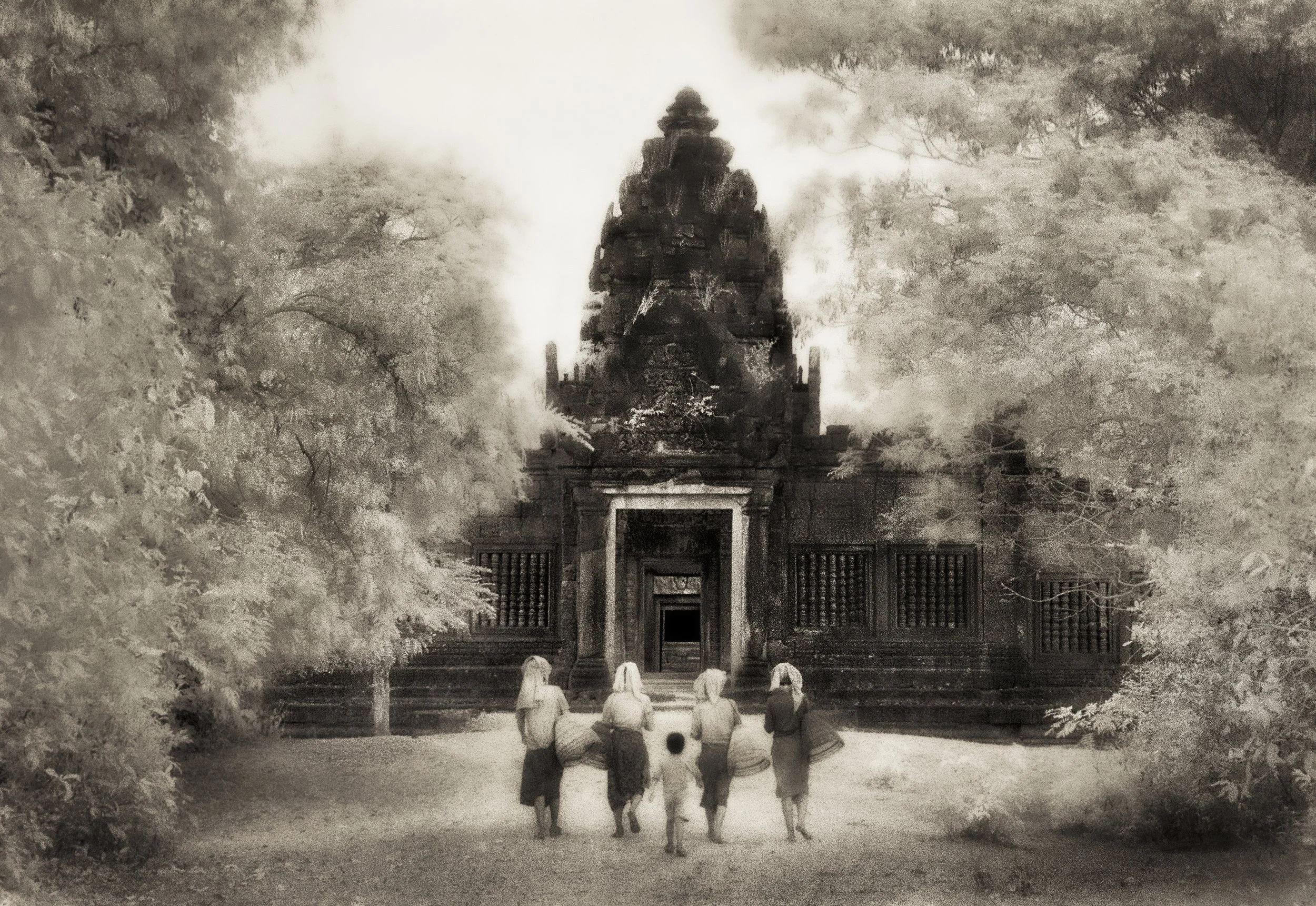
Villagers on the Pathway - Banteay Samre, 2000, Archival Pigment Ink Print, Edition #1, 30.48 x 45.72cm. (12 x 18in.)
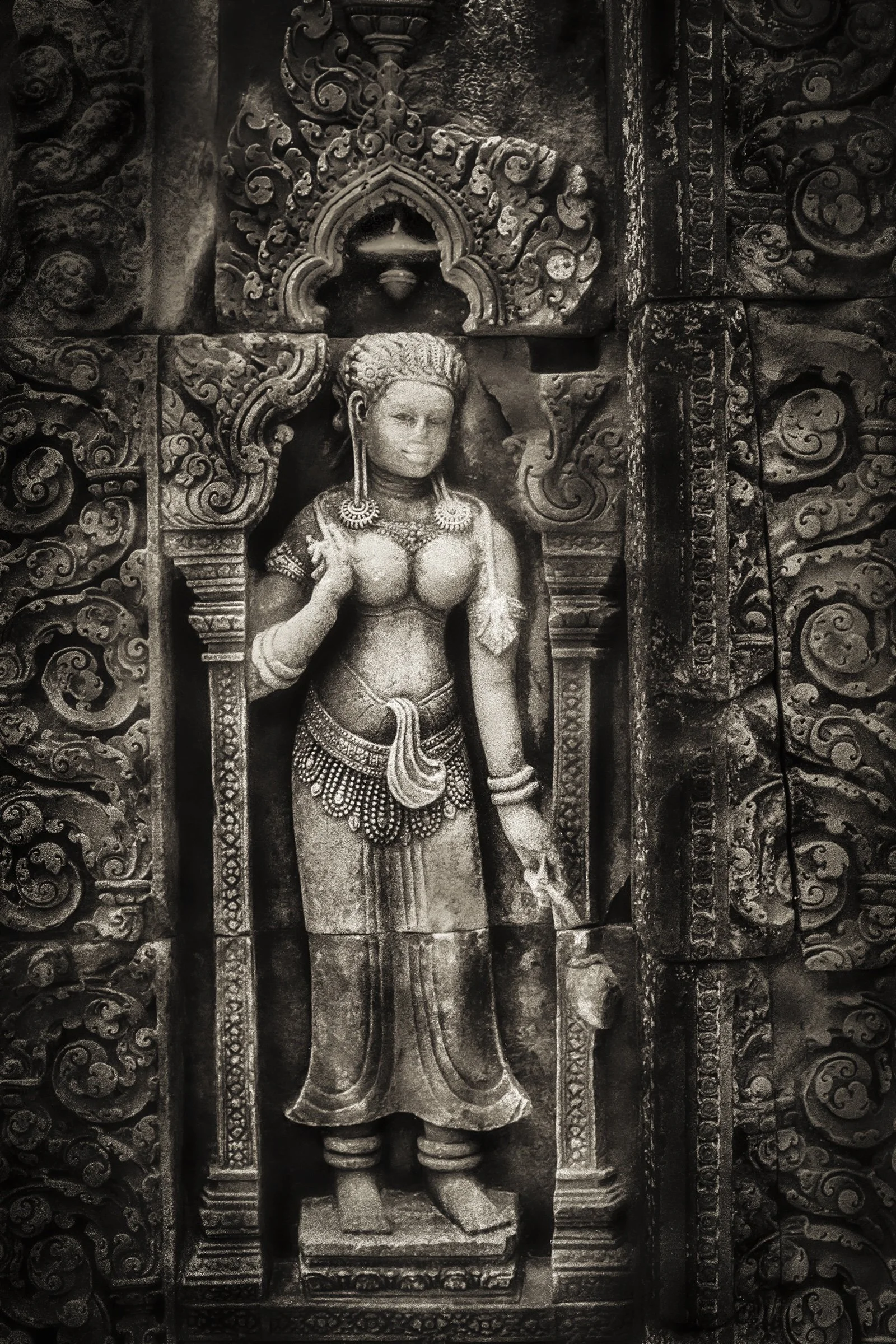
Apsara Carving - Banteay Srei, 2000, Archival Pigment Ink Print, Edition #1, 30.48 x 45.72cm. (12 x 18in.)
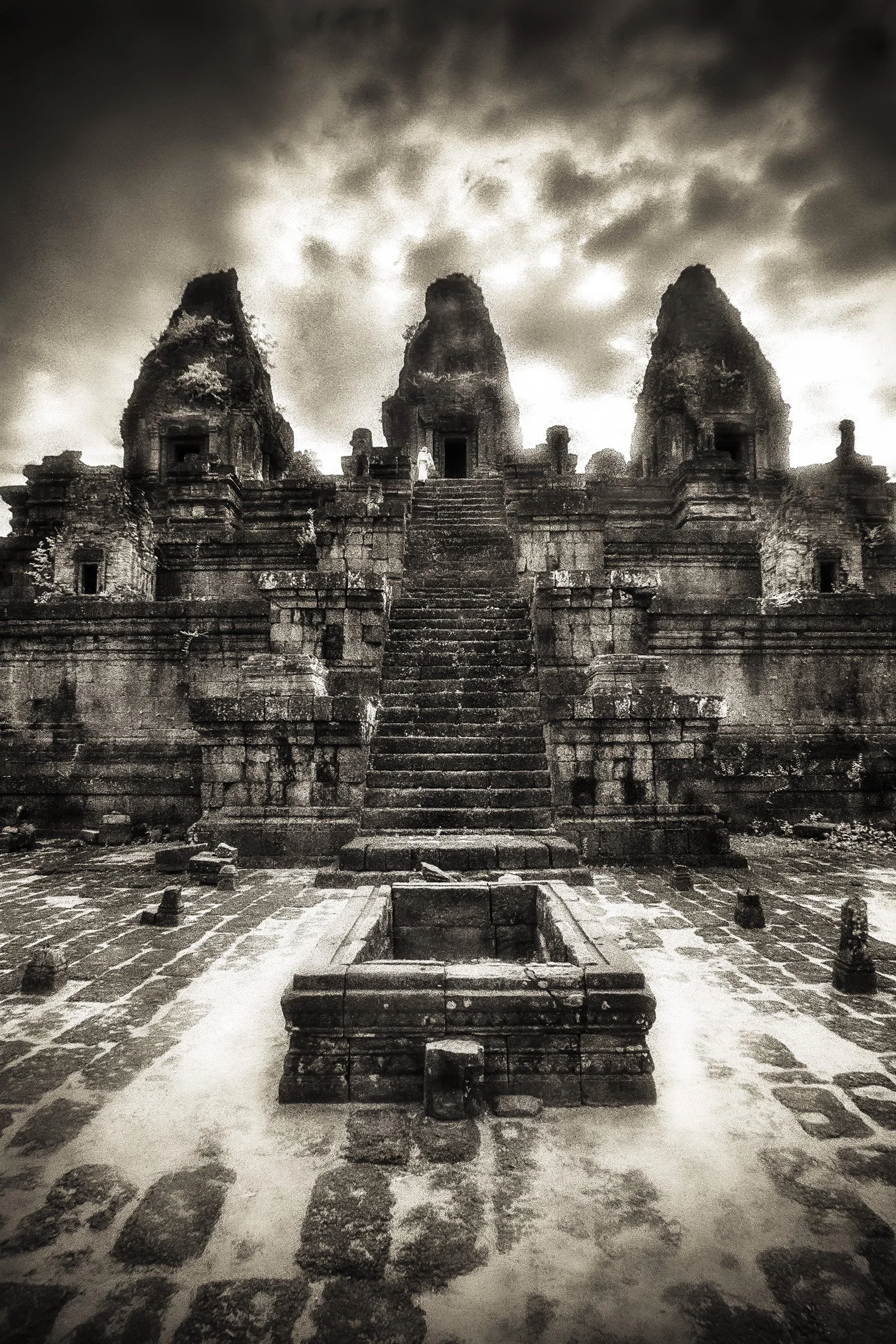
Pre Rup Towers, 2001, Archival Pigment Ink Print, Edition #1, 30.48 x 45.72cm. (12 x 18in.)
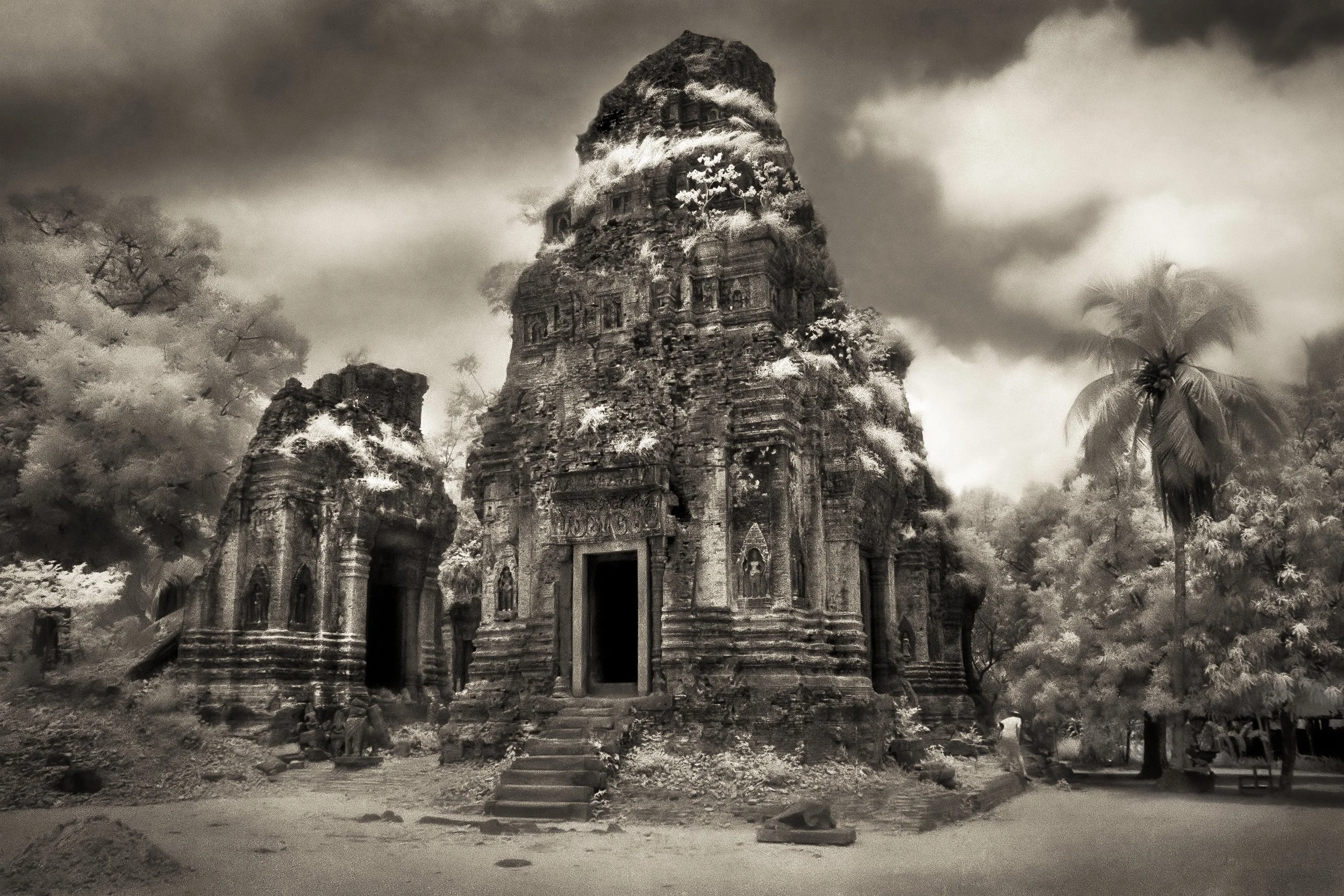
Eastern Entrance - Preah Khan 2012, Archival Pigment Ink Print, Edition #11, 30.48 x 45.72cm. (12 x 18in.)
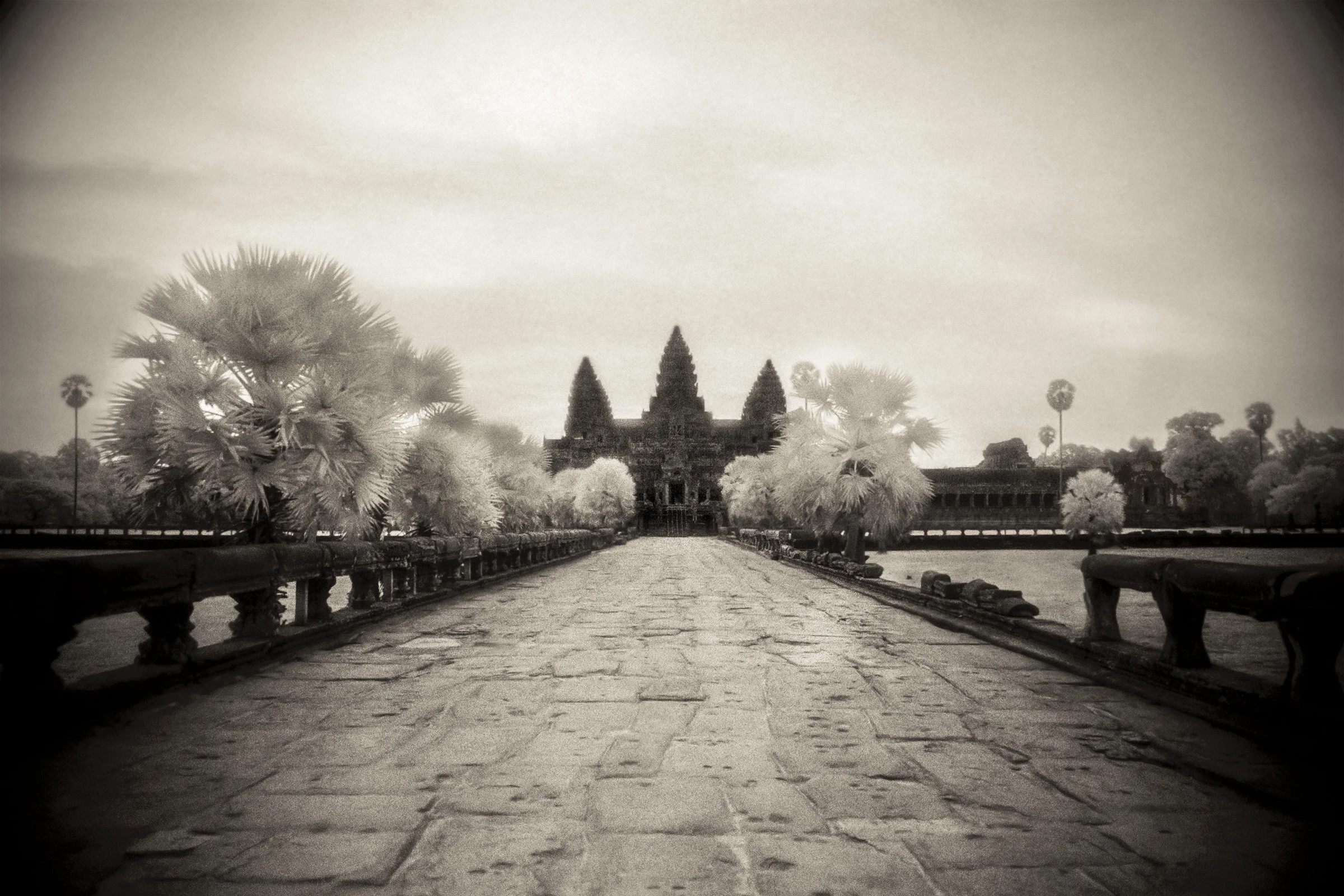
Deserted Causeway - Angkor Wat, 2001, Archival Pigment Ink Print, Edition #11, 30.48 x 45.72cm. (12 x 18in.)
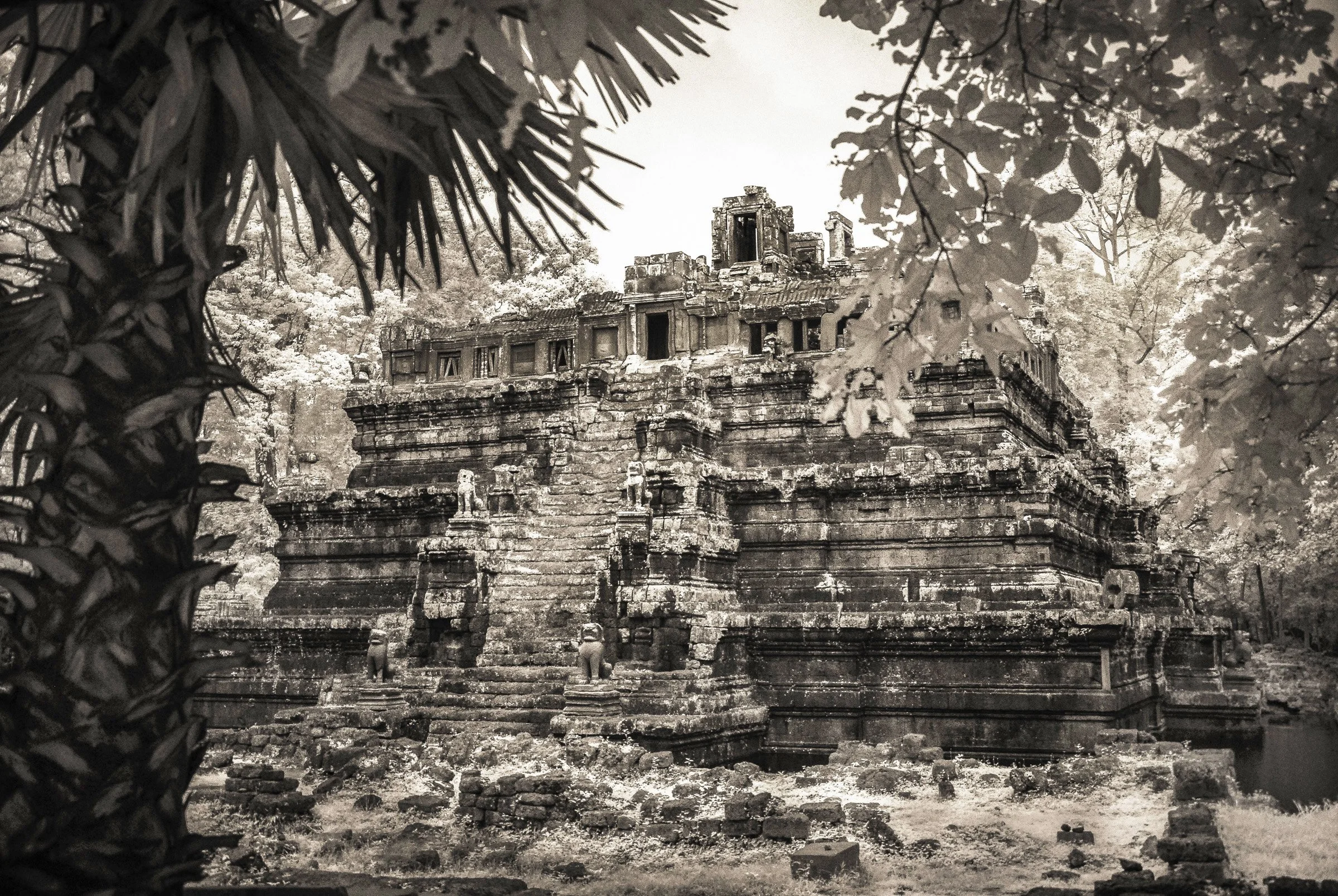
Phimeanakas - Angkor Thom, 2014, Archival Pigment Ink Print, Edition #1, 30.48 x 45.72cm. (12 x 18in.)